Skip to content
Welcome To Our Store.
100,000+ Products for Home, Medical, Office & Classroom Needs
Search
Skip to product information
1 of 1

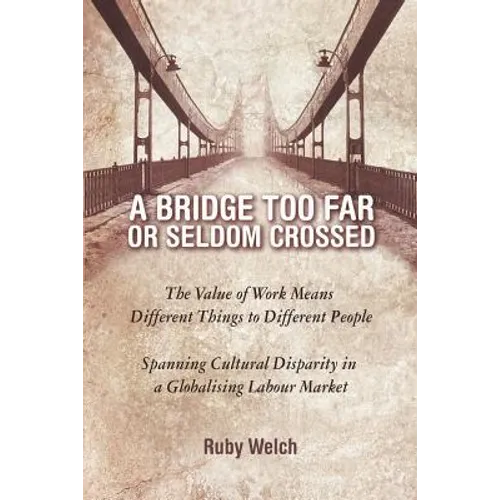
A Bridge Too Far or Seldom Crossed: The Value of Work Means Different Things to Different People, Spanning Cultural Disparity in a Globalising Labou - Paperback

$23.04 USD
$23.04 USD
Sale Sold out
Shipping calculated at checkout.
In stock (100 units), ready to be shipped

Available Offers

Fastest Delivery Tomorrow With Vip DealOrder within 1 hr 8 mins.

Instant 10% Discount On HDFC Banks Credit/Debit Cards EMI and CreditCard

Secure checkout with
  • American Express
  • Apple Pay
  • Diners Club
  • Discover
  • Google Pay
  • Mastercard
  • PayPal
  • Shop Pay
  • Visa
  • Daily deals
  • Return policy
  • Payment method
  • Help center 24/7

Flight Range: Up to 1,000 meters (3,280 feet)

Maximum Speed: 45 kilometers per hour (28 miles per hour)

For all orders exceeding a value of 100USD shipping is offered for free.

Returns will be accepted for up to 10 days of Customer’s receipt or tracking number on unworn items. You, as a Customer, are obliged to inform us via email before you return the item.

Otherwise, standard shipping charges apply. Check out our delivery Terms & Conditions for more details.

View Product Details
Shopping cart
Product Product subtotal Quantity Price Product subtotal
A Bridge Too Far or Seldom Crossed: The Value of Work Means Different Things to Different People, Spanning Cultural Disparity in a Globalising Labou - Paperback
$23.04/ea
$0.00
$23.04/ea $0.00

Product Description

by Ruby Welch (Author)

This book examines what is generally accepted in Western European societies as the work ethic, comparing it with the motivation to work of non-Western people in the labour market. People's expectations and perceptions about work are comprised of shared ideas, values, beliefs, rules, and meanings expressed through their social institutions, which the author terms "ideal systems." It is these ideal systems that influence the ways people organize their workplaces, which are in turn a subsystem of their broader society. Industrial relations are therefore culturally shaped, rather than solely determined by technological, industrial, or political considerations. Changes in societies due to industrialization and technological innovation do occur, but they don't necessarily converge, because actors in various social systems drive and adapt to social change in culturally specific ways. The Maori people of New Zealand, who have been predominantly integrated in the capitalist economy of that country, persistently show they have different expectations and purposes for participating in the workforce. In a globalizing market, workers from various cultural backgrounds are expected to work together in relative harmony, yet the author's studies indicate it is the distinction between Western individualistic thought about work that contrasts significantly with Maori holistic views of work and society.

About the Author: Ruby Welch is a retired anthropologist. She was born in the Netherlands East Indies and was five years old when the colony was invaded by the Japanese. "After the war, the Indonesians started shooting at us, and my mother and we three young children fled to Singapore. We were repatriated to the Netherlands where I attended school and high school, served in the Royal Dutch Navy for four years during the Cold War, after which I emigrated to Australia."

Number of Pages: 166
Dimensions: 0.38 x 9 x 6 IN
Illustrated: Yes
Publication Date: February 03, 2014
you might like