Skip to content
Welcome To Our Store.
100,000+ Products for Home, Medical, Office & Classroom Needs
Search
Skip to product information
1 of 1

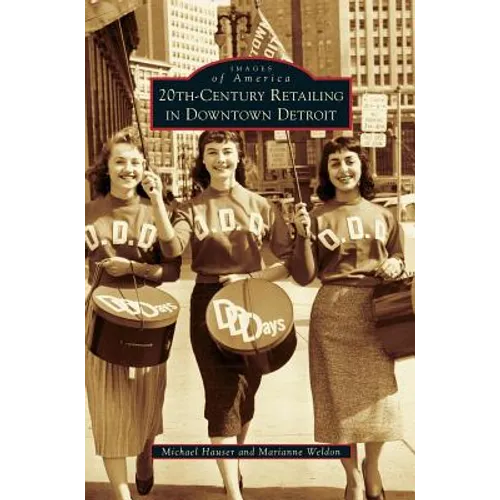
20th-Century Retailing in Downtown Detroit - Hardcover

$34.54 USD
$34.54 USD
Sale Sold out
Shipping calculated at checkout.
In stock (100 units), ready to be shipped

Available Offers

Fastest Delivery Tomorrow With Vip DealOrder within 1 hr 8 mins.

Instant 10% Discount On HDFC Banks Credit/Debit Cards EMI and CreditCard

Secure checkout with
  • American Express
  • Apple Pay
  • Diners Club
  • Discover
  • Google Pay
  • Mastercard
  • PayPal
  • Shop Pay
  • Visa

Flight Range: Up to 1,000 meters (3,280 feet)

Maximum Speed: 45 kilometers per hour (28 miles per hour)

For all orders exceeding a value of 100USD shipping is offered for free.

Returns will be accepted for up to 10 days of Customer’s receipt or tracking number on unworn items. You, as a Customer, are obliged to inform us via email before you return the item.

Otherwise, standard shipping charges apply. Check out our delivery Terms & Conditions for more details.

View Product Details
Shopping cart
Product Product subtotal Quantity Price Product subtotal
20th-Century Retailing in Downtown Detroit - Hardcover
$34.54/ea
$0.00
$34.54/ea $0.00

Product Description

by Michael Hauser (Author), Marianne Weldon (Author)

As Detroit developed northward from the riverfront, Woodward Avenue became a mecca for retail, restaurants, and services. The 1870s and 1880s saw many independent merchants open their doors. By 1890, a new type of one-stop shopping had developed: the department store. Detroit's venerable Newcomb Endicott and Company was closely followed by other trailblazers: J. L. Hudson Company, Crowley Milner and Company, and the Ernst Kern Company. At its peak in the 1950s, the Woodward Avenue area boasted over four million square feet of retail, making it one of America's preferred retail destinations. Other Detroit emporiums such as the homegrown S. S. Kresge Company set trends in consumer culture. Generations made the trek downtown for back-to-school events, Easter shows, holiday windows, and family luncheons. Then, with the advent of suburban shopping centers, downtown stores began competing with their own branch locations. By the 1970s and 1980s, the dominoes began to fall as both chain and independent stores abandoned the once prosperous Woodward Avenue.


Number of Pages: 130
Dimensions: 0.38 x 9.61 x 6.69 IN
Publication Date: November 12, 2008
you might like
