


PRODUCT DESCRIPTION
by Emily Dawson (Author)
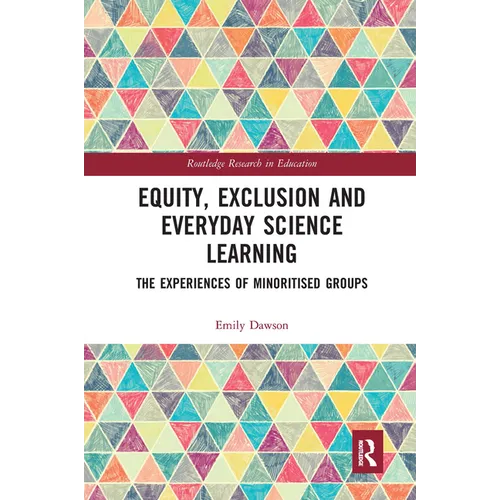
Equity, Exclusion and Everyday Science Learning explores how some people are excluded from science education and communication. Taking the role of science in society as a starting point, it critically examines the concept of equity in science learning and develops a framework to support inclusive change.
This book presents a theoretically informed, empirically detailed analysis of how people from minoritised groups in the UK experience science and everyday science learning resources in their daily lives. The book draws on two years of ethnographic research carried out in London with five community groups who identified as Asian, Somali, Afro-Caribbean, Latin American and Sierra Leonean. Exploring their experiences of everyday science learning from a sociological perspective, with social justice as a guiding concern, this book opens with a theory of exclusion and closes with a theory of inclusion.
Equity, Exclusion and Everyday Science Learning is not only an essential text for postgraduate students and postdoctoral researchers of Science Education, Science Communication and Museum Studies, but for any professional working in museums, science centres and institutional public engagement.
Author Biography
Emily Dawson is an Associate Professor in the Department of Science and Technology Studies at University College London. Her work focuses on how people engage with and learn about science, with an emphasis on equity, in particular the construction of publics and 'non' publics for science, and the role of privilege in such processes.


