


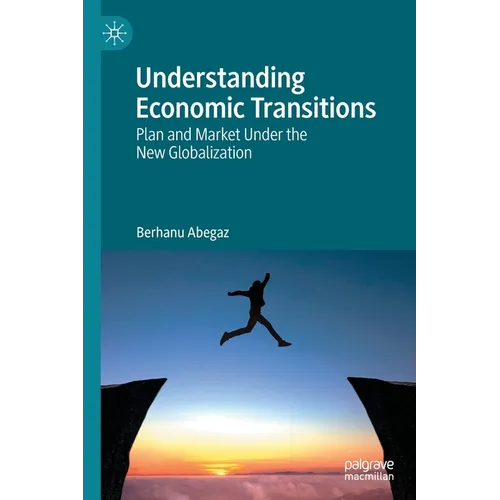
PRODUCT DESCRIPTION
by Berhanu Abegaz (Author)
Understanding Economic Transitions explains the genesis, operation, and transformation of the centrally-planned socialist economy, which figured prominently in the lives of billions of people in twentieth-century Europe and Asia. Just as importantly, the centrally-planned socialist economy's demise coincided with the shift from nonindustrial to industrial economy (and de-industrialization in some cases) and the onset of ICT-driven globalization. Using theory, empirics, and selected country case studies, this book teases out the enduring lessons from the myriad and fraught pathways of transition from socialism to capitalism.
Understanding Economic Transitions provides a self-contained, comprehensive, and authoritative treatment of modern economic systems. This textbook has four features of particular use to students: (i) Using the prism of comparative institutionalism, it melds theory andevidence to revisit the varieties of planned and market-driven systems today; (ii) It takes economic planning seriously in theory and practice (central, cooperative, or indicative) as the most prominent marker of the ever-changing boundaries between state and market; (iii) It focuses on the dynamics of systemic transition in formerly socialist countries by contextualizing them in terms of the whence (central planning), the how (modalities of transition), and the whither (illiberal or liberal capitalism) of politico-economic transformation; and (iv) It examines the profound impact on these structural processes of the post-1990 phase of economic globalization. With its clear, comprehensive content and useful pedagogical features, this textbook will prepare students to understand how economies transition and why.
Back Jacket
Understanding Economic Transitions explains the genesis, operation, and transformation of the centrally-planned socialist economy, which figured prominently in the lives of billions of people in twentieth-century Europe and Asia. Just as importantly, the centrally-planned socialist economy's demise coincided with the shift from nonindustrial to industrial economy (and de-industrialization in some cases) and the onset of ICT-driven globalization. Using theory, empirics, and selected country case studies, this book teases out the enduring lessons from the myriad and fraught pathways of transition from socialism to capitalism.
Understanding Economic Transitions provides a self-contained, comprehensive, and authoritative treatment of modern economic systems. This textbook has four features of particular use to students: (i) Using the prism of comparative institutionalism, it melds theory andevidence to revisit the varieties of planned and market-driven systems today; (ii) It takes economic planning seriously in theory and practice (central, cooperative, or indicative) as the most prominent marker of the ever-changing boundaries between state and market; (iii) It focuses on the dynamics of systemic transition in formerly socialist countries by contextualizing them in terms of the whence (central planning), the how (modalities of transition), and the whither (illiberal or liberal capitalism) of politico-economic transformation; and (iv) It examines the profound impact on these structural processes of the post-1990 phase of economic globalization. With its clear, comprehensive content and useful pedagogical features, this textbook will prepare students to understand how economies transition and why.
Berhanu Abegaz is Professor of Economics at William & Mary. He specializes in comparative economics, institutional economics, and development economics. He is the author of four books and two edited volumes on the subjects of economic planning, late industrialization, regional economic integration, and state formation.
Author Biography
Berhanu Abegaz is Professor of Economics at William & Mary. He specializes in comparative economics, institutional economics, and development economics. He is the author of four books and two edited volumes on the subjects of economic planning, late industrialization, regional economic integration, and state formation.


