


Product Description
by Godfrey Mwakikagile (Author)
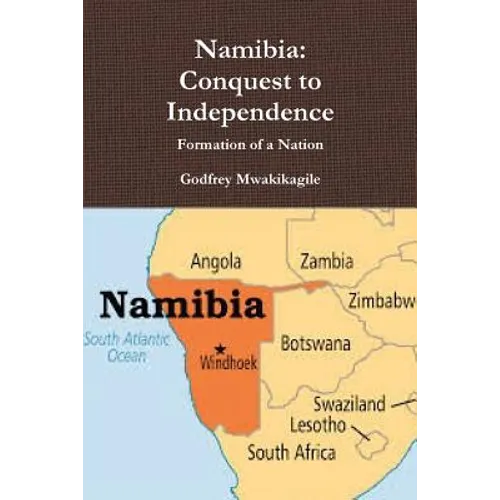
The author looks at how Namibia was founded as a German colony known as Deutsch-S dwestafrika (German South-West Africa) and how it evolved into a nation. He explains how it was founded on brutal suppression of the indigenous people, including extermination, and how, on becoming a colony of South Africa, its people continued to be subjected to brutal treatment by the white minority rulers who denied them racial equality. The author also focuses on the liberation struggle against apartheid and how the country won independence from apartheid South Africa. He also looks at how the leaders of the new nation are trying to build the country and construct a national identity on the basis of unity in diversity. It is an analysis of identity formation at the national level, and consolidation of the state, whose relevance is continental in scope: studies of other African countries in their quest for unity and construction - or reconstruction - of their national identities during the post-colonial era can benefit from this work. It is also a work of comparative analysis in terms of nationhood in the African context and how Namibia and Tanzania - two case studies - have sought to construct their national identities, the obstacles they have faced and continue to face in the quest for national unity, especially in the case of Namibia, and why Tanzania has been more successful than most countries on the continent in building a cohesive society where tribalism is virtually non-existent, enabling it to consolidate its unity and national identity. The author also looks at the concept of national character and its relevance to national identity formation and why the national identities of different African countries are weak and what can be done to address the problem. It is also an introductory text which may be helpful to some people who are going to Namibia for the first time although it is essentially a scholarly work intended for members of the academic community and specialists in some fields dealing with this southwest African country and its people. But members of the general public who want to learn more about Namibia may also find the book to be useful.