


PRODUKTBESCHREIBUNG
by Jonathan Mercer (Author)
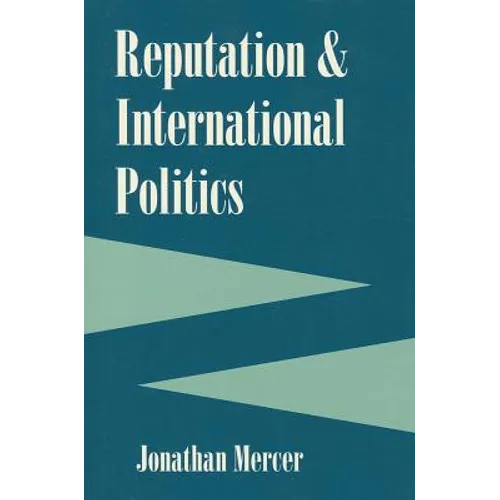
By approaching an important foreign policy issue from a new angle, Jonathan Mercer comes to a startling, controversial discovery: a nation's reputation is not worth fighting for. He presents the most comprehensive examination to date of what defines a reputation, when it is likely to emerge in international politics, and with what consequences. Mercer examines reputation formation in a series of crises before World War I. He tests competing arguments, one from deterrence theory, the other from social psychology, to see which better predicts and explains how reputations form. Extending his findings to address recent crises such as the Gulf War, he also considers how culture, gender, and nuclear weapons affect reputation. Throughout history, wars have been fought in the name of reputation. Mercer rebuts this politically powerful argument, shows that reputations form differently than we thought, and offers policy advice to decision-makers.
Back Jacket
By approaching an important foreign policy issue from a new angle, Jonathan Mercer comes to a startling, controversial discovery: a nation's reputation is not worth fighting for. He presents the most comprehensive examination to date of what defines a reputation when it is likely to emerge in international politics, and with what consequences. Mercer examines reputation formation in a series of crises before World War I. He tests competing arguments, one from deterrence theory, the other from social psychology, to see which better predicts and explains how reputations form. He extends his findings to address contemporary crises such as the Gulf War, and considers how culture, gender and nuclear weapons affect reputation. Throughout history, wars have been fought in the name of reputation. Mercer rebuts this politically powerful argument, shows that reputations form differently than we thought, and offers policy advice to decision-makers.
Author Biography
Jonathan Mercer is Associate Professor of Political Science at the University of Washington.


