


Product Description
by Stephen Genco (Author)
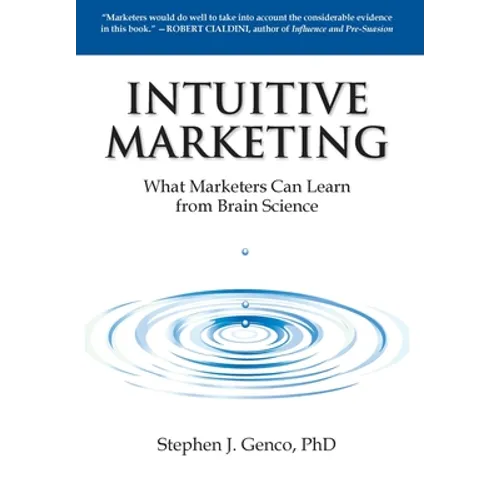
Intuitive Marketing introduces a new theory of marketing that does not rely on overt or covert persuasion and does not require treating consumers as "patsies."
Traditional marketing assumes its purpose is persuasion: it must grab people's attention, get them to change their minds, and convince them to do what they didn't know they wanted to do. Marketers compete every day to develop messages that "attract eyeballs," "rise above the clutter," and achieve "stopping power."
But to the average consumer, marketing and advertising are becoming overwhelming. From their point of view, it's all clutter, it's all annoying, it's all an imposition on their already overworked conscious minds. Ironically, marketers are creating a "tragedy of the commons" effect. By collectively overgrazing consumers' "attentional commons," they are creating an environment that makes it less likely consumers will allocate attention to any of their messages.
Intuitive marketing is based on a different view of how consumers think, act, and respond to marketing; a view built directly on the latest findings and insights from brain science.
Like traditional marketing, intuitive marketing seeks to influence consumers. But it does so in a radically different way: by aligning with consumers' existing motivations and goals, primarily in the service of positive psychological needs, rather than by attempting to impose immediate transactional goals on consumers using tactics of disruption, distraction, and persuasion.
Five intuitive marketing strategies are presented throughout the book. They show how marketers can simultaneously shape and satisfy consumer wants and needs by leveraging cognitive mechanisms such as unconscious association building, familiarity, trust, conditioning via small emotional rewards, and connecting with consumers' innate aspirations and identity needs.
Intuitive Marketing demonstrates both the perils of persuasion as a marketing strategy and the promise of intuitive marketing as a better way to build lasting relationships with customers and consumers. It provides a path forward for marketing that treats consumers with respect, earns (rather than demands) attention, aligns with (rather than disrupts) consumer motivations and goals, and recognizes the reality of how consumers think, learn, and choose in the modern marketplace.