Skip to content
Welcome To Our Store.
100,000+ Products for Home, Medical, Office & Classroom Needs
Search
Skip to product information
1 of 1

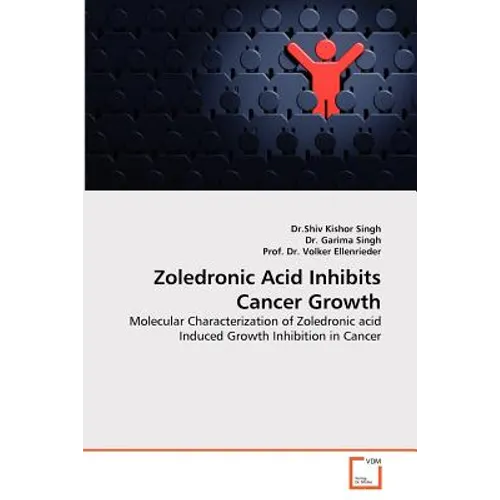
Zoledronic Acid Inhibits Cancer Growth - Paperback

$76.21
$76.21
Sale Sold out
Shipping calculated at checkout.
In stock (100 units), ready to be shipped

Available Offers

Fastest Delivery Tomorrow With Vip DealOrder within 1 hr 8 mins.

Instant 10% Discount On HDFC Banks Credit/Debit Cards EMI and CreditCard

Secure checkout with
  • American Express
  • Apple Pay
  • Diners Club
  • Discover
  • Google Pay
  • Mastercard
  • PayPal
  • Shop Pay
  • Visa

Flight Range: Up to 1,000 meters (3,280 feet)

Maximum Speed: 45 kilometers per hour (28 miles per hour)

For all orders exceeding a value of 100USD shipping is offered for free.

Returns will be accepted for up to 10 days of Customer’s receipt or tracking number on unworn items. You, as a Customer, are obliged to inform us via email before you return the item.

Otherwise, standard shipping charges apply. Check out our delivery Terms & Conditions for more details.

View Product Details
Shopping cart
Product Product subtotal Quantity Price Product subtotal
Zoledronic Acid Inhibits Cancer Growth - Paperback
$76.21/ea
$0.00
$76.21/ea $0.00

Product Description

by Shiv Kishor Singh (Author), Garima Singh (Author), Volker Ellenrieder (Author)

The aminobisphosphonate zoledronic acid(ZOL) has elicited significant attention due to its remarkable anti-tumoral activity, though its detailed mechanism of action remains unclear. Here, we demonstrate the existence of a nuclear GSK3-NFATc2 stabilization pathway that promotes cancer growth in vitro and in vivo and serves as a bonafide target of ZOL. Specifically, the serine/threonine kinase GSK3 stabilizes nuclear NFATc2 through phosphorylation of the serine-rich SP2 domain, thus protecting the transcription factor from E3-ubiquitin ligase HDM2 mediated proteolysis. ZOL disrupts this NFATc2 stabilization pathway through two mechanisms, namely GSK3 inhibition and induction of HDM2 activity. Upon nuclear accumulation, HDM2 targets unphosphorylated NFATc2 for ubiquitination at acceptor lysine residues K-684/K-897 and hence labels the factor for subsequent proteasomal degradation. Conversely, mutagenesis induced constitutive serine phosphorylation of the SP2 domain prevents NFATc2 from HDM2 mediated ubiquitination and degradation by ZOL. In conclusion, this report demonstrates a critical role of the GSK3-HDM2 signaling loop in the regulation of NFATc2 protein stabili

Number of Pages: 120
Dimensions: 0.28 x 9 x 6 IN
Publication Date: July 08, 2011
you might like