Product Description
by Brian L. Moore (Author), Michele A. Johnson (Author)
"Primary sources on English Jamaica in the seventeenth century are extremely rare, especially ones reproduced in print. The University of the West Indies Press has performed a significant service in making public one of the most important sources for early Jamaican history - John Taylor's manuscript describing his travels to and residency in Jamaica from 1686 to 1688. . . . Taylor wrote for his fellow Englishmen back home, and his inter
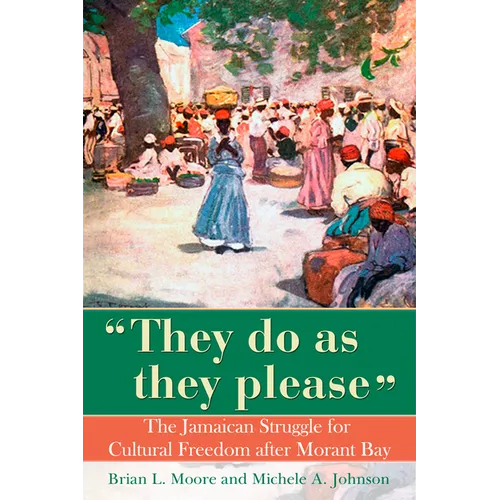
This book is a companion to Neither Led nor Driven, published in 2004. It examines the secular aspects of culture in Jamaica, namely, material culture (architecture and home furnishings, dress, and food), rites of passage, language and oral culture, creative and performance arts, popular entertainment, sports and games, social clubs and fraternities, and the issues of drinking and gambling. It also examines the lifestyle cultures of Indian and Chinese immigrants who were new arrivals in Jamaica.
The book argues that although a vibrant and fully functional creole culture existed in Jamaica, after Morant Bay, diverse elements within the upper and middle classes (the cultural elites) formed a coalition to eradicate that "barbaric" culture which they believed had contributed to the uprising, and to replace it with "superior" cultural items imported from Victorian Britain in order to "civilize" and anglicize the people. It reinforces the prime thesis of Neither Led nor Driven that the lower classes, the main targets of this campaign, drew on their own Afro- Creole cultural heritage to resist and ignore the new elite cultural agenda; but they did selectively embrace some aspects of the imported Victorian culture which they creolized to fit their own cultural matrix. Ultimately, the cultural elite efforts at "reform" were hampered by their own ambivalence, hypocrisy and disunity, and they actually impeded the sponsored process of anglicization. This book advances our understanding of the concept and process of creolization. It extends the pioneering work of Kamau Brathwaite and reassesses the theories of other scholars, particularly Richard Burton and Nigel Bolland.
The data are primary archival and contemporary library resources housed mainly in Jamaica and the United Kingdom. The authors' meticulous analysis of official reports, newspapers, religious denomination reports, private papers and published accounts has produced a work that illuminates the complex and still under-explored period of Jamaica's history as the society entered new phases of "modernity".