Skip to content
Welcome To Our Store.
100,000+ Products for Home, Medical, Office & Classroom Needs
Search
Skip to product information
1 of 1

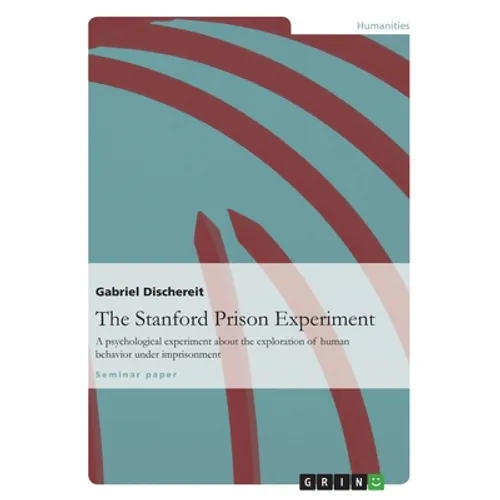
The Stanford Prison Experiment: A psychological experiment about the exploration of human behavior under imprisonment - Paperback

$30.38
$30.38
Sale Sold out
Shipping calculated at checkout.
In stock (100 units), ready to be shipped

Available Offers

Fastest Delivery Tomorrow With Vip DealOrder within 1 hr 8 mins.

Instant 10% Discount On HDFC Banks Credit/Debit Cards EMI and CreditCard

Secure checkout with
  • American Express
  • Apple Pay
  • Diners Club
  • Discover
  • Google Pay
  • Mastercard
  • PayPal
  • Shop Pay
  • Visa

Flight Range: Up to 1,000 meters (3,280 feet)

Maximum Speed: 45 kilometers per hour (28 miles per hour)

For all orders exceeding a value of 100USD shipping is offered for free.

Returns will be accepted for up to 10 days of Customer’s receipt or tracking number on unworn items. You, as a Customer, are obliged to inform us via email before you return the item.

Otherwise, standard shipping charges apply. Check out our delivery Terms & Conditions for more details.

View Product Details
Shopping cart
Product Product subtotal Quantity Price Product subtotal
The Stanford Prison Experiment: A psychological experiment about the exploration of human behavior under imprisonment - Paperback
$30.38/ea
$0.00
$30.38/ea $0.00

Product Description

by Gabriel Dischereit (Author)

Seminar paper from the year 2004 in the subject Sociology - Methodology and Methods, grade: 1,2, Justus-Liebig-University Giessen, language: English, abstract: In the 1970s and '80s, the behavioral researcher and psychologist Prof. Philip Zimbardo tested the effects of extraordinary situations on human subjects. Zimbardo was less concerned with demonstrating the personal situations, developments and psychological case studies of individuals, and rather was searching for universal relationships between external influences and the behavior of the subject. Such influences are to be observed in situations of extreme duress, as illustrated by those in prisons. After World War II there were a multitude of reports from prisoners about their personal experiences, the influences and effects of their respective time in prison. Zimbardo now wanted to observe the effects of prison on a universal level. He thus clearly separated the personal psyche of the individual from the factors that would encroach from the "outside", making them equal to prisoners. The core question Zimbardo was experimenting with was the question of the "good" and "evil" in humans. Would good or evil triumph in individuals who were subjected to extreme stress and were required to resort to violence? What influence does the environment have on this decision? Who is actually responsible for reporting extraordinary violence in prisons? Is it the special characters and individuals gathered within the prison, or must this phenomenon be ascribed to the imposed prison environment?

Number of Pages: 24
Dimensions: 0.05 x 10 x 7 IN
Publication Date: March 13, 2014
you might like