The Space of Disappearance: A Narrative Commons in the Ruins of Argentine State Terror - Paperback
Available Offers
Fastest Delivery Tomorrow With Vip DealOrder within 1 hr 8 mins.
Instant 10% Discount On HDFC Banks Credit/Debit Cards EMI and CreditCard
Couldn't load pickup availability
Product Details
Flight Range: Up to 1,000 meters (3,280 feet)
Maximum Speed: 45 kilometers per hour (28 miles per hour)
Shipping And Return
For all orders exceeding a value of 100USD shipping is offered for free.
Returns will be accepted for up to 10 days of Customer’s receipt or tracking number on unworn items. You, as a Customer, are obliged to inform us via email before you return the item.
Otherwise, standard shipping charges apply. Check out our delivery Terms & Conditions for more details.
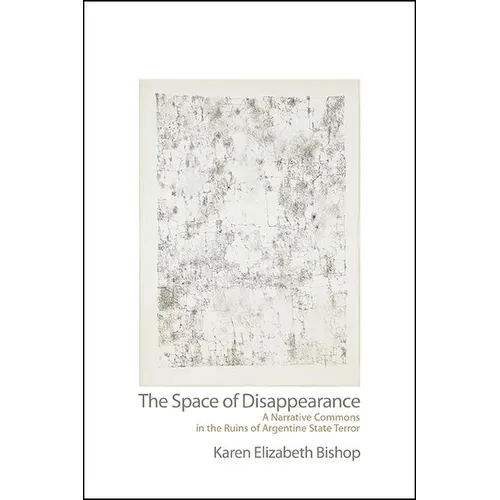
Product Description
by Karen Elizabeth Bishop (Author)
Examines the evolution of disappearance as a formal narrative and epistemological phenomenon in late twentieth-century Argentine fiction.
More than thirty thousand people were forcibly disappeared during the military dictatorship that governed Argentina from 1976 to 1983, leaving behind a cultural landscape fractured by absence, denial, impunity, and gaps in knowledge. This book is about how these absences assume narrative form in late twentieth-century Argentine fiction and the formal strategies and structures authors have crafted to respond to the country's use of systematic disappearance as a mechanism of state terror. In incisive close readings of texts by Rodolfo Walsh, Julio Cortázar, and Tomás Eloy Martínez, Karen Elizabeth Bishop explores how techniques of dissimulation, doubling, displacement, suspension, and embodiment come to serve both epistemological and ethical functions, grounding new forms of historical knowledge and a new narrative commons whose work continues into the twenty-first century. Their writing, Bishop argues, recalibrates our understanding of the rich and increasingly urgent reciprocities between fiction, history, and the demands of human rights. In the end, The Space of Disappearance asks us to reexamine in fiction what we think we cannot see; there, at the limits of the literary, disappearance appears as a vital agent of resistance, storytelling, and world-building.
Author Biography
Karen Elizabeth Bishop is Assistant Professor of Spanish and Comparative Literature at Rutgers University-New Brunswick. She is the editor of Cartographies of Exile: A New Spatial Literacy.