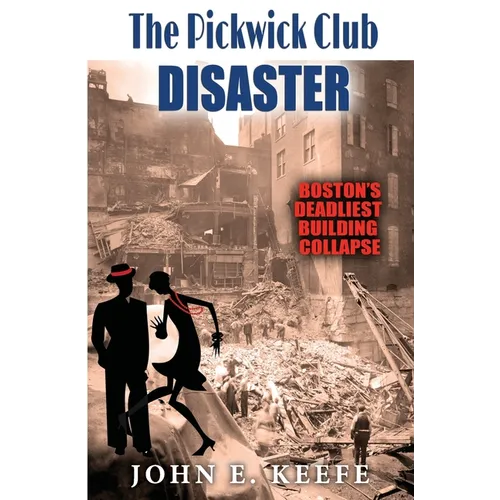
The Pickwick Club Disaster: Boston's Deadliest Building Collapse - Paperback
Available Offers
Fastest Delivery Tomorrow With Vip DealOrder within 1 hr 8 mins.
Instant 10% Discount On HDFC Banks Credit/Debit Cards EMI and CreditCard
Couldn't load pickup availability
Product Details
Flight Range: Up to 1,000 meters (3,280 feet)
Maximum Speed: 45 kilometers per hour (28 miles per hour)
Shipping And Return
For all orders exceeding a value of 100USD shipping is offered for free.
Returns will be accepted for up to 10 days of Customer’s receipt or tracking number on unworn items. You, as a Customer, are obliged to inform us via email before you return the item.
Otherwise, standard shipping charges apply. Check out our delivery Terms & Conditions for more details.
Product Description
by John E. Keefe (Author)
The year was 1925. Five years of Prohibition had seemingly accomplished little other than to foster a widespread belief that the unpopular edict was just a thinly-disguised attempt to legislate morals, and Americans had begun to push back by drinking more than ever. A new dance sensation called the Charleston was sweeping the country. During the early morning hours of July 4, a crowd of Prohibition-defying revelers were kicking up their heels to that latest craze when they unknowingly triggered the deadliest building collapse in Boston's history.
The dingy, smoke-filled speakeasy on the second floor of a rundown, five-story former hotel was still packed with holiday celebrants as the clock neared three that morning. The orchestra had time to play only two more numbers. The last one would be something mellow but, for the second last, the conductor chose a popular ragtime number. When the spirited music began, dozens of couples crowded onto the small, linoleum-covered dance floor to do the Charleston. For nearly five minutes they jumped, kicked, and stomped-blissfully unaware that the steady, rhythmic pounding was causing dangerous, resonant vibrations throughout the unstable building's entire support structure. Finally, the music stopped. Many of the exhausted couples were still on the floor, waiting for the night's last dance, when the lights grew strangely dim, flickered a few times, and then went out, plunging the room into darkness. A moment later the old building began to shake so violently that some of the dancers lost their balance and fell. Anguished screams were drowned out by the ear-splitting screech of boards and timbers being torn apart, then the ripping, tearing noise gave way to a thunderous roar as countless tons of bricks and debris crashed down from the upper floors. Terrified patrons rushed for the door. Many of them didn't make it. The floor gave way beneath them sending everyone and everything-tables, chairs, bricks, beams, and plaster-tumbling downward like an avalanche into a pitch-black abyss. The Pickwick Club Disaster spotlights the mistakes and the negligence that brought the building to that sorry state. It describes the hurried investigation, the criminal trial, and the frantic efforts of public officials to distance themselves from blame, and takes a glimpse into the lives of each of the forty-four people who perished.