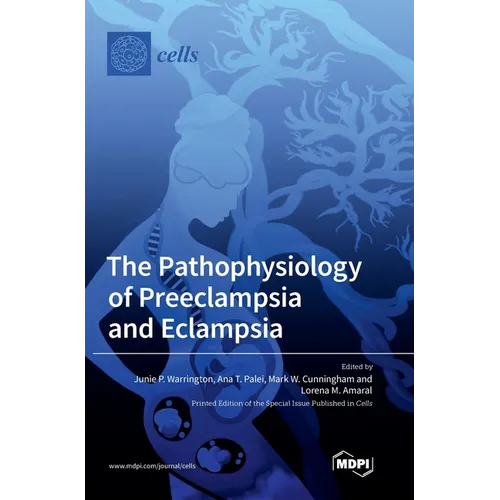
The Pathophysiology of Preeclampsia and Eclampsia - Hardcover
Available Offers
Fastest Delivery Tomorrow With Vip DealOrder within 1 hr 8 mins.
Instant 10% Discount On HDFC Banks Credit/Debit Cards EMI and CreditCard
Couldn't load pickup availability
Product Details
Flight Range: Up to 1,000 meters (3,280 feet)
Maximum Speed: 45 kilometers per hour (28 miles per hour)
Shipping And Return
For all orders exceeding a value of 100USD shipping is offered for free.
Returns will be accepted for up to 10 days of Customer’s receipt or tracking number on unworn items. You, as a Customer, are obliged to inform us via email before you return the item.
Otherwise, standard shipping charges apply. Check out our delivery Terms & Conditions for more details.
Product Description
by Junie P. Warrington (Guest Editor), Ana T. Palei (Guest Editor), Mark W. Cunningham (Guest Editor)
Preeclampsia is a hypertensive disorder of pregnancy, diagnosed after the 20th week of gestation in women experiencing new-onset hypertension along with symptoms affecting the liver, kidneys, or brain. In some cases, women with preeclampsia develop novel seizures or unexplained coma, at which time they are diagnosed with eclampsia. The mechanisms contributing to preeclampsia and eclampsia are not fully elucidated, although the placenta seems to play a critical role. Previous studies suggest that improper placentation stimulates mitochondrial dysfunction and the exaggerated release of placental-derived molecules including inflammatory cytokines, anti-angiogenic factors, reactive oxygen species, and cell-free nucleic acids into the maternal circulation that cause systemic vascular dysfunction. These, along with maternally derived molecules, act in concert, leading to hypertension and target organ damage during pregnancies complicated by preeclampsia and eclampsia.
In this reprint, we present the original research articles and review papers published as part of the Special Issue: "The Pathophysiology of Preeclampsia and Eclampsia" in Cells.