The Man Who Was Thursday: A Magic Lamp Classic Mystery - Paperback
Available Offers
Fastest Delivery Tomorrow With Vip DealOrder within 1 hr 8 mins.
Instant 10% Discount On HDFC Banks Credit/Debit Cards EMI and CreditCard
Couldn't load pickup availability
Product Details
Flight Range: Up to 1,000 meters (3,280 feet)
Maximum Speed: 45 kilometers per hour (28 miles per hour)
Shipping And Return
For all orders exceeding a value of 100USD shipping is offered for free.
Returns will be accepted for up to 10 days of Customer’s receipt or tracking number on unworn items. You, as a Customer, are obliged to inform us via email before you return the item.
Otherwise, standard shipping charges apply. Check out our delivery Terms & Conditions for more details.
Product Description
by G. K. Chesterton (Author)
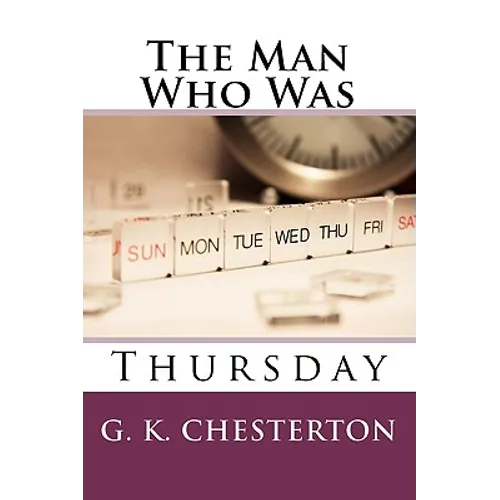
It is very difficult to classify "The Man Who Was Thursday." It is possible to say that it is a gripping adventure story of murderous criminals and brilliant policemen; but it was to be expected that the author of the "Father Brown" stories should tell a detective story like no-one else. On this level, therefore, "The Man Who Was Thursday" succeeds superbly; if nothing else, it is a magnificent tour-de-force of suspense-writing. However, the reader will soon discover that it is much more than that. Carried along on the boisterous rush of the narrative by Chesterton's wonderful high-spirited style. You will soon see that you are being carried into much deeper waters than you planned on; and the totally unforeseeable denouement will prove, as it has for thousands of others since 1908 when the book was first published, an inevitable and moving experience, as the investigators finally discover who Sunday is.
Author Biography
Gilbert Keith Chesterton was born in London, England on the 29th of May, 1874. Though he considered himself a mere "rollicking journalist," he was actually a prolific and gifted writer in virtually every area of literature. A man of strong opinions and enormously talented at defending them, his exuberant personality nevertheless allowed him to maintain warm friendships with people--such as George Bernard Shaw and H. G. Wells--with whom he vehemently disagreed. Chesterton had no difficulty standing up for what he believed. He was one of the few journalists to oppose the Boer War. His 1922 Eugenics and Other Evils attacked what was at that time the most progressive of all ideas, the idea that the human race could and should breed a superior version of itself. In the Nazi experience, history demonstrated the wisdom of his once "reactionary" views. He is probably best known for his series about the priest-detective Father Brown who appeared in 50 stories. Chesterton died on the 14th of June, 1936 in Beaconsfield, Buckinghamshire. During his life he published 69 books and at least another ten have been published after his death. Many of those books are still in print.