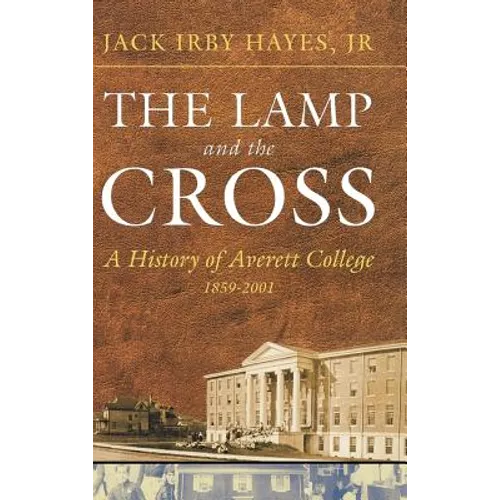
The Lamp and the Cross: Averitt - Hardcover
Available Offers
Fastest Delivery Tomorrow With Vip DealOrder within 1 hr 8 mins.
Instant 10% Discount On HDFC Banks Credit/Debit Cards EMI and CreditCard
Couldn't load pickup availability
Product Details
Flight Range: Up to 1,000 meters (3,280 feet)
Maximum Speed: 45 kilometers per hour (28 miles per hour)
Shipping And Return
For all orders exceeding a value of 100USD shipping is offered for free.
Returns will be accepted for up to 10 days of Customer’s receipt or tracking number on unworn items. You, as a Customer, are obliged to inform us via email before you return the item.
Otherwise, standard shipping charges apply. Check out our delivery Terms & Conditions for more details.
Product Description
by J. I. Hayes (Author), Jack Hayes (Author)
This work examines the birth and maturation of Averett College, and institution of higher learning in Southside Virginia. The school's official seal--and elliptical medallion with the words Averett College, Danville, Virginia surrounding a lamp and cross--was emblematic of the institution's history and mission. The lamp represented learning, while the cross stood for the Southern Baptist environment in which learning took place. Yet these two symbols were never static representations. Learning in 1859, when the college was founded, was designed to produce a finished you lady who could model high culture while attending to hearth and community. Refinement of this curriculum during the next four decades preceded dramatic change in the early twentieth century: job-related education, and elective system, and junior college status. Pre-professional, coeducation and a baccalaureate program followed. Next came new degrees and new venues. The 1980s and 1990s brought non-traditional adult education at twenty-five sites throughout Virginia that soon eclipsed the traditional program. Just as the lamp and cross continued to be enduring motifs, the mission of the institution also reflected the purposes of education in the United States. Since colonial times, Americans have regarded education as essential to representative government. By the 1820s, Americans considered schooling essential to democracy. In the emerging industrial age of the nineteenth century as financial necessity and opportunity continually challenged traditional female roles, Americans were forced to concede the urgency of educating women. The place of Averett College in this larger educational milieu is secondary theme of thiswork.