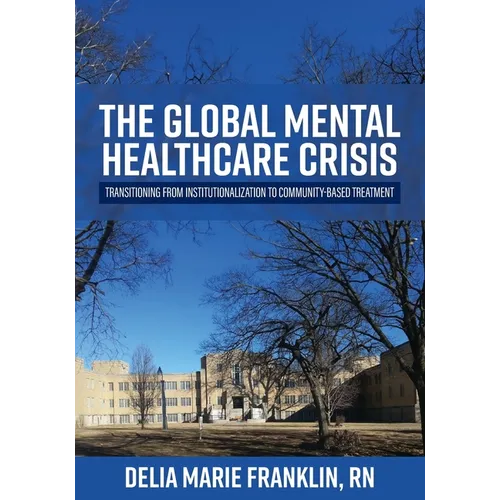
The Global Mental Healthcare Crisis: Transitioning from Institutionalization to Community-Based Treatment - Paperback
Available Offers
Fastest Delivery Tomorrow With Vip DealOrder within 1 hr 8 mins.
Instant 10% Discount On HDFC Banks Credit/Debit Cards EMI and CreditCard
Couldn't load pickup availability
Product Details
Flight Range: Up to 1,000 meters (3,280 feet)
Maximum Speed: 45 kilometers per hour (28 miles per hour)
Shipping And Return
For all orders exceeding a value of 100USD shipping is offered for free.
Returns will be accepted for up to 10 days of Customer’s receipt or tracking number on unworn items. You, as a Customer, are obliged to inform us via email before you return the item.
Otherwise, standard shipping charges apply. Check out our delivery Terms & Conditions for more details.
Product Description
by Delia Marie Franklin (Author)
The Global Mental Healthcare Crisis: Transitioning from Institutionalization to Community-Based Treatment discusses global mental healthcare systems through the examination of institutionalization, deinstitutionalization, transinstitutionalization, community-based treatment, substance misuse provisions, mental healthcare providers, pandemics, and governmental strategies related to mental health.
Part I of the book focuses on global mental healthcare systems. The chapters cover laws related to institutionalization in the U.K., Italy, Canada, France, and the U.S.; historical treatments and modalities, including now-controversial methods such as restraint, electroconvulsive therapy, and sterilization, among others; and the positive attributes that arose in the wake of global deinstitutionalization movements. Part II discusses impacts, discrepancies, and adversities with chapters that address the roles of psychiatrists, psychologists, counselors, therapists, technicians, and psychiatric nurses within the mental healthcare system; comorbidity and substance use disorder; the impact of COVID-19 on mental health worldwide; and obstacles to quality mental health treatment, including homelessness, suicide, and cost factors. The final part provides strategies for improved mental healthcare services, including community mental health provisions, telemental health, governmental actions, and more.
With a focus on developing systems that center on the prevention, recovery, and stabilization of mental conditions, The Global Mental Healthcare Crisis is an exemplary resource for courses and programs that prepare healthcare providers to well serve their patients.