The Disappearance of Writing Systems: Perspectives on Literacy and Communication - Paperback
Available Offers
Fastest Delivery Tomorrow With Vip DealOrder within 1 hr 8 mins.
Instant 10% Discount On HDFC Banks Credit/Debit Cards EMI and CreditCard
Couldn't load pickup availability
Product Details
Flight Range: Up to 1,000 meters (3,280 feet)
Maximum Speed: 45 kilometers per hour (28 miles per hour)
Shipping And Return
For all orders exceeding a value of 100USD shipping is offered for free.
Returns will be accepted for up to 10 days of Customer’s receipt or tracking number on unworn items. You, as a Customer, are obliged to inform us via email before you return the item.
Otherwise, standard shipping charges apply. Check out our delivery Terms & Conditions for more details.
Product Description
by John D. Baines (Editor), John Bennet (Editor), Stephen Houston (Editor)
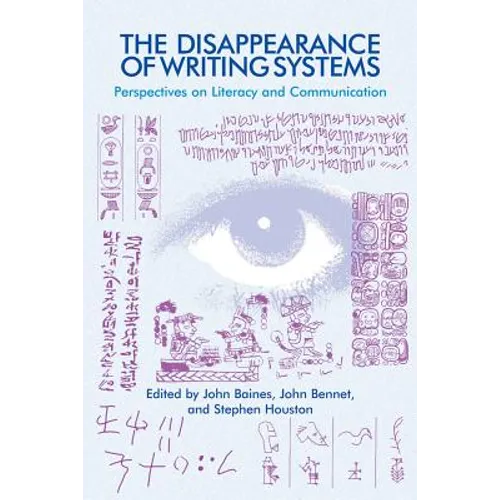
This volume gathers papers from the first conference ever to be held on the disappearance of writing systems, in Oxford in March 2004. While the invention and decipherment of writing systems have long been focuses of research, their eclipse or replacement have been little studied. Because writing is so important in many cultures and civilizations, its disappearance - followed by a period without it or by replacement with a different writing system - is of almost equal significance to invention as a mark of radical change. Probably more writing systems have disappeared than have survived in the last five thousand years.
Case studies from the Old and New Worlds are presented, ranging over periods from the second millennium BC to the present. To address many types of transmission, the broadest possible definition of 'writing' is used, notably including Mexican pictography and the Andean khipu system. One chapter discusses the larger proportion of known human societies which have not possessed complex material codes like writing, offering an alternative perspective on the long-term transmission of socially salient subjects. A concluding essay draws out common themes and offers an initial synthesis of results.
The volume offers a new perspective on approaches to writing that will be significant for the understanding of writing systems and their social functions, literacy, memory, and high-cultural communication systems in general.