The Body of John Merryman: Abraham Lincoln and the Suspension of Habeas Corpus - Hardcover
Available Offers
Fastest Delivery Tomorrow With Vip DealOrder within 1 hr 8 mins.
Instant 10% Discount On HDFC Banks Credit/Debit Cards EMI and CreditCard
Couldn't load pickup availability
Product Details
Flight Range: Up to 1,000 meters (3,280 feet)
Maximum Speed: 45 kilometers per hour (28 miles per hour)
Shipping And Return
For all orders exceeding a value of 100USD shipping is offered for free.
Returns will be accepted for up to 10 days of Customer’s receipt or tracking number on unworn items. You, as a Customer, are obliged to inform us via email before you return the item.
Otherwise, standard shipping charges apply. Check out our delivery Terms & Conditions for more details.
Product Description
by Brian McGinty (Author)
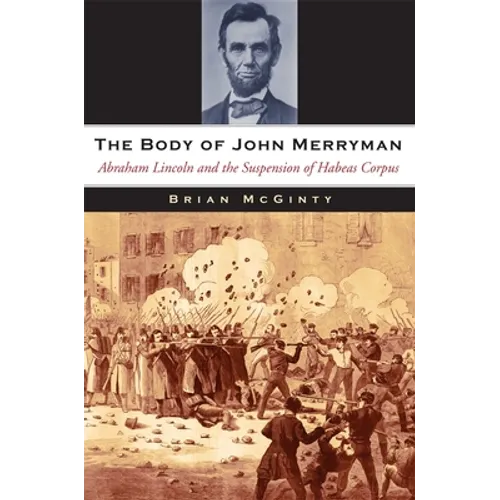
In April 1861, President Abraham Lincoln suspended the writ of habeas corpus along the military line between Washington, D.C., and Philadelphia. This allowed army officers to arrest and indefinitely detain persons who were interfering with military operations in the area. When John Merryman, a wealthy Marylander suspected of burning bridges to prevent the passage of U.S. troops to Washington, was detained in Fort McHenry, the chief justice of the Supreme Court, Roger Taney, declared the suspension of habeas corpus unconstitutional and demanded Merryman's immediate release. Lincoln defied Taney's order, offering his own forceful counter-argument for the constitutionality of his actions. Thus the stage was set for one of the most dramatic personal and legal confrontations the country has ever witnessed.
The Body of John Merryman is the first book-length examination of this much-misunderstood chapter in American history. Brian McGinty captures the tension and uncertainty that surrounded the early months of the Civil War, explaining how Lincoln's suspension of habeas corpus was first and foremost a military action that only subsequently became a crucial constitutional battle. McGinty's narrative brings to life the personalities that drove this uneasy standoff and expands our understanding of the war as a legal--and not just a military, political, and social--conflict. The Body of John Merryman is an extraordinarily readable book that illuminates the contours of one of the most significant cases in American legal history--a case that continues to resonate in our own time.