Product Description
by Eric Sterner (Author)
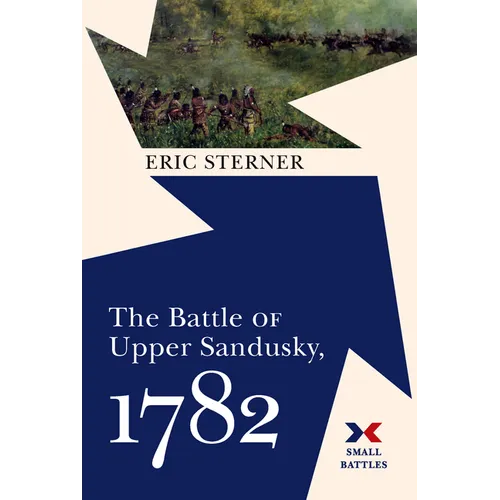
In May 1782, Colonel William Crawford led over 450 volunteers across Ohio to attack British-allied Native Americans who had been raiding the frontiers of Pennsylvania and Virginia for years. An experienced yet reluctant commander, Crawford and his men clashed with a similarly sized force of British Rangers and Wyandot, Delaware, and Shawnee Indians on the Sandusky River in early June. After three days, the Americans were routed in one of the worst defeats American arms suffered on the frontier during the American Revolution. During the retreat, Native American warriors captured dozens of men, including Colonel Crawford. Many were horrifically tortured to death in revenge for the Gnadenhutten massacre earlier that spring, when American volunteers bludgeoned nearly one hundred unarmed and unresisting Delaware Indians to death.
The Battle of Upper Sandusky, 1782 places military operations at the forefront of events in the waning months of the American Revolution on the frontier. Importantly, it gives long-deserved credit to Native American leaders, particularly Dunquat of the Wyandot and Hopocan of the Delaware, for their roles and commands on the battlefield. For over two centuries, their victory was attributed to the presence of British Rangers and a few officers, but Dunquat and Hopocan made the critical decisions before and after the battle while Native American warriors constituted the bulk of their army.
The book also reconsiders the effectiveness of American operations. Crawford was an unenthusiastic commander who had to be talked into leading the campaign to help prevent a repeat of the Gnadenhutten massacre. Despite his long service on the frontier and experience in the Continental Army, Crawford failed to unite his ad hoc command, suffered from constant indecision, and could not put his own stamp on the campaign. The unprofessional nature of his army also contributed to its defeat as it lacked organization, experience, leadership, training, and standardization.
The presence of Simon Girty, demonized by Americans on the frontier as a turncoat, and the gruesomeness of Crawford's execution focused stories about the campaign on those two individuals, rather than the military operations themselves or the Indians who won the victory. Myths were accepted as fact. Afterward, interest in the campaign and the combatants faded. The Battle of Upper Sandusky, 1782 gives Crawford's campaign its proper place as one of the largest battles between frontier forces and Native Americans during the Revolutionary War.
Author Biography
Eric Sterner earned a BA from American University and two MAs from George Washington University. He worked in the defense and aerospace field, serving on the staff of two Congressional committees and in the Department of Defense and as a NASA Associate Deputy Administrator. He is the author of Anatomy of a Massacre: The Destruction of Gnadenhutten, 1782 and contributes regularly to the Journal of the American Revolution and Emerging Revolutionary War Era.