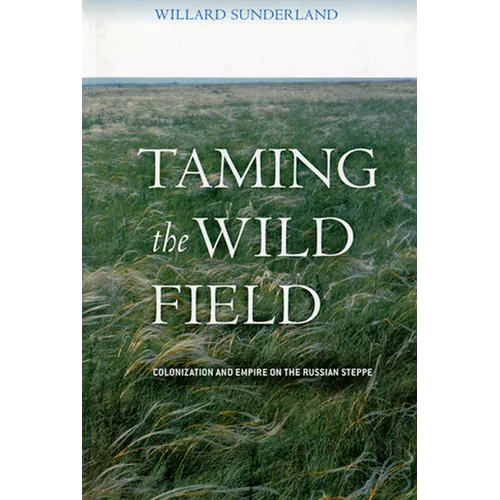
Taming the Wild Field: Colonization and Empire on the Russian Steppe - Paperback
Available Offers
Fastest Delivery Tomorrow With Vip DealOrder within 1 hr 8 mins.
Instant 10% Discount On HDFC Banks Credit/Debit Cards EMI and CreditCard
Couldn't load pickup availability
Product Details
Flight Range: Up to 1,000 meters (3,280 feet)
Maximum Speed: 45 kilometers per hour (28 miles per hour)
Shipping And Return
For all orders exceeding a value of 100USD shipping is offered for free.
Returns will be accepted for up to 10 days of Customer’s receipt or tracking number on unworn items. You, as a Customer, are obliged to inform us via email before you return the item.
Otherwise, standard shipping charges apply. Check out our delivery Terms & Conditions for more details.
Product Description
by Willard Sunderland (Author)
Stretching from the tributaries of the Danube to the Urals and from the Russian forests to the Black and Caspian seas, the vast European steppe has for centuries played very different roles in the Russian imagination. To the Grand Princes of Kiev and Muscovy, it was the "wild field," a region inhabited by nomadic Turko-Mongolic peoples who repeatedly threatened the fragile Slavic settlements to the north. For the emperors and empresses of imperial Russia, it was a land of boundless economic promise and a marker of national cultural prowess. By the mid-nineteenth century the steppe, once so alien and threatening, had emerged as an essential, if complicated, symbol of Russia itself.Traversing a thousand years of the region's history, Willard Sunderland recounts the complex process of Russian expansion and colonization, stressing the way outsider settlement at once created the steppe as a region of empire and was itself constantly changing. The story is populated by a colorful array of administrators, Cossack adventurers, Orthodox missionaries, geographers, foreign entrepreneurs, peasants, and (by the late nineteenth century) tourists and conservationists. Sunderland's approach to history is comparative throughout, and his comparisons of the steppe with the North American case are especially telling.Taming the Wild Field eloquently expresses concern with the fate of the world's great grasslands, and the book ends at the beginning of the twentieth century with the initiation of a conservation movement in Russia by those appalled at the high environmental cost of expansion.
Author Biography
Willard Sunderland is Associate Professor of History at the University of Cincinnati.