Sister Style: The Politics of Appearance for Black Women Political Elites - Paperback
Available Offers
Fastest Delivery Tomorrow With Vip DealOrder within 1 hr 8 mins.
Instant 10% Discount On HDFC Banks Credit/Debit Cards EMI and CreditCard
Couldn't load pickup availability
Product Details
Flight Range: Up to 1,000 meters (3,280 feet)
Maximum Speed: 45 kilometers per hour (28 miles per hour)
Shipping And Return
For all orders exceeding a value of 100USD shipping is offered for free.
Returns will be accepted for up to 10 days of Customer’s receipt or tracking number on unworn items. You, as a Customer, are obliged to inform us via email before you return the item.
Otherwise, standard shipping charges apply. Check out our delivery Terms & Conditions for more details.
Product Description
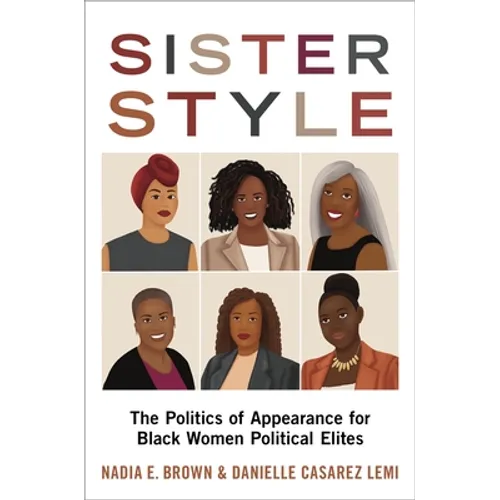
by Nadia E. Brown (Author), Danielle Casarez Lemi (Author)
"They don't think I'm viable, because I'm a Black woman with natural hair and no husband." This comment was made by Stacey Abrams shortly before the 2018 Democratic primary after she became the first Black woman to win a majory party's nomination for governor. Abrams' sentiment reflects the wider environment for Black women in politics, in which racist and sexist cultural ideas have long led Black women to be demeaned and fetishized for their physical appearance.
In Sister Style, Nadia E. Brown and Danielle Casarez Lemi argue that Black women's political experience and the way that voters evaluate them is shaped overtly by their skin tone and hair texture, with hair being a particular point of scrutiny. They ask what the politics of appearance for Black women mean for Black women politicians and Black voters, and how expectations about self-presentation differ for Black women versus Black men, White men, and White women. Black women running for office face pressure, often from campaign consultants and even close colleagues, to change their style in order to look more like White women. However, as this book shows, Black women candidates and elected officials react differently to these pressures depending on factors like age and incumbency. Moreover, Brown and Lemi delve into the ways in which Black voters react to Black female candidates based on appearance. They base their argument, in part, on focus groups with Black women candidates andelected officials, and show that there are generational differences that determine what sorts of styles Black women choose to adopt and to what extent they change their physical appearance based on external expectations.
Author Biography
Nadia E. Brown is a University Faculty Scholar and an Associate Professor of Political Science and African American Studies at Purdue University. She is the author of Sisters in the Statehouse: Black Women and Legislative Decision Making.