


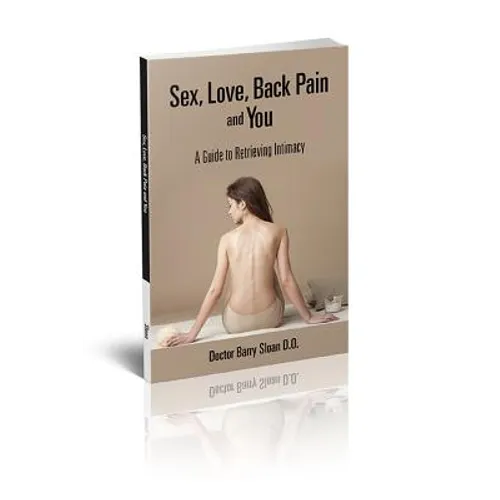
Sex, Love, Back Pain and You: A Guide to Restoring Health and Intimacy - Paperback
Available Offers
Fastest Delivery Tomorrow With Vip DealOrder within 1 hr 8 mins.
Instant 10% Discount On HDFC Banks Credit/Debit Cards EMI and CreditCard
Couldn't load pickup availability
Product Details
Flight Range: Up to 1,000 meters (3,280 feet)
Maximum Speed: 45 kilometers per hour (28 miles per hour)
Shipping And Return
For all orders exceeding a value of 100USD shipping is offered for free.
Returns will be accepted for up to 10 days of Customer’s receipt or tracking number on unworn items. You, as a Customer, are obliged to inform us via email before you return the item.
Otherwise, standard shipping charges apply. Check out our delivery Terms & Conditions for more details.
Product Description
by Bruce Byers (Author), Barry Sloan D. O. (Author)
This book is a practical, and yet medically informed guide for those suffering from Chronic Back Pain - especially its effect on intimacy, its negative effect on sexuality and intimate relations. One of the most important tasks of the book is identification of subtle (indeed, nearly invisible) physical and psychological damages be back injury, pain and even treatment.
The single most important reason to read this book is its grounding in the lives of patient with formidable problems. Few, if any texts go into the homes and or discuss sexual problems. This was work, but critical work if relationships were to survive. In this text, the years of wisdom gathered from couples made romance possible to regain with months - not years.
Only a very small percentage of texts like this one try to see the depth of back pain patients' problems. Here we see the patient, couple, dating teens, and retired bakers throughout the day and into the night.
Diagnostic medical tools reveal physical problems, but not those that come up at home and in the workplace. A first edition of this text attempted to generate solutions based on short office visits. Yet we all knew that in today's clinics, office time is short. Too often, the end with little discussion beyond perscriptions and referalls.
The interviews in this book captured experiences revealed from extensive hours and identifying specific situations.
The book also looks carefully at the rise of pain control medication: the right to live without pain but balanced by the need to stay connected to friends, families and responsibility to remain lucid and not "hide" from pain, which medications can allow. If we have not provided the means to achieve that, we will return to homes that must be visited, and return to the keyboard as well. With luck, we will be armed with information richer in detail, from both patients and practitioners alike.











