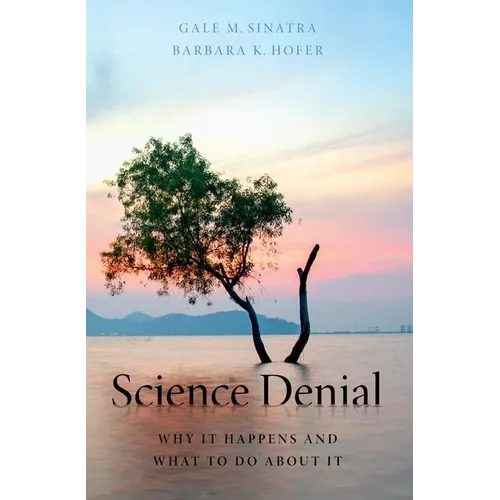
Science Denial: Why It Happens and What to Do about It - Paperback
Available Offers
Fastest Delivery Tomorrow With Vip DealOrder within 1 hr 8 mins.
Instant 10% Discount On HDFC Banks Credit/Debit Cards EMI and CreditCard
Couldn't load pickup availability
Product Details
Flight Range: Up to 1,000 meters (3,280 feet)
Maximum Speed: 45 kilometers per hour (28 miles per hour)
Shipping And Return
For all orders exceeding a value of 100USD shipping is offered for free.
Returns will be accepted for up to 10 days of Customer’s receipt or tracking number on unworn items. You, as a Customer, are obliged to inform us via email before you return the item.
Otherwise, standard shipping charges apply. Check out our delivery Terms & Conditions for more details.
Product Description
by Gale M. Sinatra (Author), Barbara K. Hofer (Author)
How do individuals decide whether to accept human causes of climate change, vaccinate their children against childhood diseases, or practice social distancing during a pandemic? Democracies depend on educated citizens who can make informed decisions for the benefit of their health and well-being, as well as their communities, nations, and planet. Understanding key psychological explanations for science denial and doubt can help provide a means for improving scientific literacy and understanding--critically important at a time when denial has become deadly. In Science Denial: Why It Happens and What to Do About It, the authors identify the problem and why it matters and offer tools for addressing it. This book explains both the importance of science education and its limitations, shows how science communicators may inadvertently contribute to the problem, and explains how the internet and social media foster misinformation and disinformation. The authors focus on key psychological constructs such as reasoning biases, social identity, epistemic cognition, and emotions and attitudes that limit or facilitate public understanding of science, and describe solutions for individuals, educators, science communicators, and policy makers. If you have ever wondered why science denial exists, want to know how to understand your own biases and those of others, and would like to address the problem, this book will provide the insights you are seeking.
Author Biography
Gale M. Sinatra is the Stephen H. Crocker Professor of Education and Psychology at the Rossier School of Education at the University of Southern California, where she directs the Motivated Change Research Lab. She received her B.S., M.S., and Ph.D. in psychology from the University of Massachusetts, Amherst. She has been recognized by the American Educational Research Association for career achievements in research with the Sylvia Scribner Award. She resides in Altadena, California.
Barbara K. Hofer is a Professor of Psychology Emerita at Middlebury College and is a Fellow of the American Psychological Association. She received her Ph.D. in psychology and education from the University of Michigan and an Ed.M. in human development from Harvard University. She is the recipient of national awards for both research and teaching, from the American Educational Research Association and the American Psychological Association. She lives in Middlebury, Vermont.