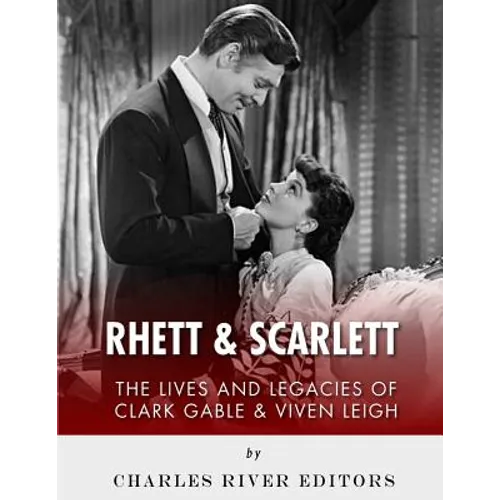
Rhett & Scarlett: The Lives and Legacies of Clark Gable and Vivien Leigh - Paperback
Available Offers
Fastest Delivery Tomorrow With Vip DealOrder within 1 hr 8 mins.
Instant 10% Discount On HDFC Banks Credit/Debit Cards EMI and CreditCard
Couldn't load pickup availability
Product Details
Flight Range: Up to 1,000 meters (3,280 feet)
Maximum Speed: 45 kilometers per hour (28 miles per hour)
Shipping And Return
For all orders exceeding a value of 100USD shipping is offered for free.
Returns will be accepted for up to 10 days of Customer’s receipt or tracking number on unworn items. You, as a Customer, are obliged to inform us via email before you return the item.
Otherwise, standard shipping charges apply. Check out our delivery Terms & Conditions for more details.
Product Description
by Charles River (Author)
*Includes pictures of important people, places, and events.
*Includes Leigh and Gable's quotes about their lives and careers. *Includes a bibliography for further reading.
Of course, what made 1939 the watershed year was the release of several critically acclaimed movies, including The Wizard of Oz and Mr. Smith Goes to Washington. But the most famous of the bunch, and perhaps the most famous movie of all, is Gone With the Wind. Leading man Clark Gable had a unique appeal that captivated Depression-era audiences; while Cary Grant offered a sophisticated charm and Fred Astaire was tied to the musical genre, Gable brought an air of sophistication that was less comical than that of Grant and appealed to both genders, unlike Astaire. At a time when so many Americans were financially destitute, Gable managed to appear classy without coming across as snobbish. At the same time, his virile masculinity was not overly macho or misogynist. For these reasons, Gable was able to captivate male and female viewers alike, and his mass appeal was a driving force behind the commercial success of Gone With the Wind, possibly the most beloved Hollywood film ever made. As iconic director John Huston once stated, "Clark Gable was the only real he-man I've ever known, of all the actors I've met."
One of the most remarkable aspects of the film is that the quintessential Southern belle was played by Vivien Leigh, a British actress still relatively unknown in Hollywood. Vivien was an accomplished stage actress and had already appeared in foreign films during the 1930s, but she was a complete dark horse to get the iconic role she's still associated with, and it only came about because of her persistence in getting cast for the role. 30 years after Gone With the Wind was released, one film critic credited Selznick's "inspired casting" of Vivien Leigh as Scarlett with the film's success. Another 30 years later, the same critic wrote that Leigh "still lives in our minds and memories as a dynamic force rather than as a static presence."
While Gone With the Wind made Leigh a big name practically overnight, she continued to buck the usual trend by doing Broadway and even appearing on stage in London during the 1940s, instead of focusing on movies. A lot of this was no doubt due to her famous marriage to Laurence Olivier, himself an accomplished stage and film actor. At the same time, Vivien became notorious for being difficult to work with and unusually temperamental, a byproduct of bipolar disorder that frequently affected her mood and occasionally left her incoherently hysterical.
Despite starring together just that one time, Gable and Leigh produced one of the most memorable movie couples, but they were also tied together by similar fates and premature deaths. Rhett & Scarlett examines the lives and careers of the two Hollywood icons. Along with pictures of important people, places, and events, you will learn about Clark Gable and Vivien Leigh like never before.