


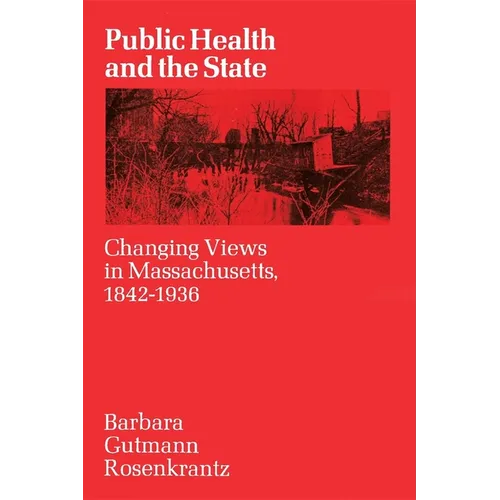
Public Health and the State: Changing Views in Massachusetts. 1842-1936 - Paperback
Available Offers
Fastest Delivery Tomorrow With Vip DealOrder within 1 hr 8 mins.
Instant 10% Discount On HDFC Banks Credit/Debit Cards EMI and CreditCard
Couldn't load pickup availability
Product Details
Flight Range: Up to 1,000 meters (3,280 feet)
Maximum Speed: 45 kilometers per hour (28 miles per hour)
Shipping And Return
For all orders exceeding a value of 100USD shipping is offered for free.
Returns will be accepted for up to 10 days of Customer’s receipt or tracking number on unworn items. You, as a Customer, are obliged to inform us via email before you return the item.
Otherwise, standard shipping charges apply. Check out our delivery Terms & Conditions for more details.

Product Description
by Barbara Rosenkrantz (Author)
Public Health and the State constitutes both a fine piece of social history and an ideal model for evaluating our current definition of public health. In this thought-provoking account, Ms. Rosenkrantz perceptively traces the development of the Massachusetts State Board of Health--established in 1869 as the first state institution in the United States responsible for preventing unnecessary mortality and promoting all aspects of public health.
This study describes the areas in which state responsibility for deterring disease assumed increased authority after the Civil War. It begins at a time when the definition of health' implied that it could be achieved, supported by the perfectionist belief that a healthy populace--obedient to the laws of nature--guaranteed a sound society. As rapid urban and industrial growth began to sweep the country, however, there was an expressed concern that this expansion threatened the health and morals of the people. During this period, when the etiology of disease was ascribed to a variety of environmental and behavioral factors, the Massachusetts Board developed a comprehensive program of investigation and advice on such diverse issues as housing, water supplies, slaughterhouse conditions, and the use of alcohol. Later, as specific medical prophylaxis and therapy came to characterize public health policy, the relationship between sanitary science and social reform was redefined by both professional standards and public expectation. The State Board depended less and less upon its ability to influence individual conduct. Laboratory scientists, chemists, and physicians, who tended to describe disease in biological terms, directed public health toward science. In view of pressing public health problems posed by such hazards as drug abuse and environmental pollution, Ms. Rosenkrantz warns us that it is as important to identify the origins of the social and scientific assumptions regarding public health as it is to discover the biological etiology of disease. The last chapter of Public Health and the State suggests that the goal of perfect health, based upon the ideal concepts of the past, may no longer be a viable objective. For these reasons she views the development of the Massachusetts State Board of Health as "the story of a successful endeavor that can never be re-enacted."










