Product Description
by International Association for Food Prote (Author)
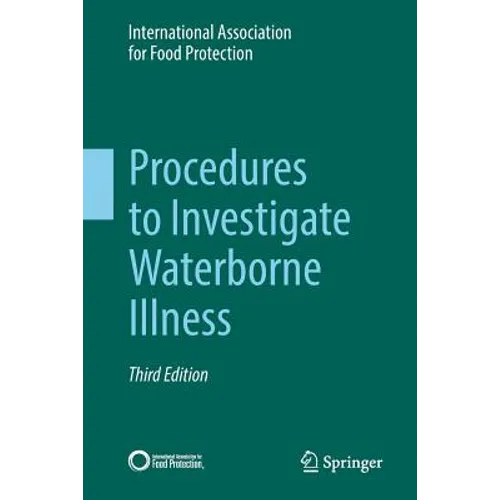
Written by a team of international experts, this third edition designed to guide public health personnel or teams in any country that investigates reports of alleged waterborne illnesses. The manual is based on epidemiologic principles and investigative techniques that have been found effective in determining causal factors of disease incidence. The guidelines are presented in the sequence usually followed during investigations and are organized so that an investigator can easily find the information needed in any phase of an investigation.
The book services as a guide to:
- Develop a waterborne disease surveillance and emergency operations program
- Handle illness alerts and water-related complaints that may be related to illness
- Interview ill persons, those at risk, and controls
- Develop a case definition
- Transport water specimens and clinical specimens
- Trace sources of contamination
- Identify factors responsible for contamination, survival of pathogenic microorganisms or toxic substances, and/or propagation of pathogens
- Collate and interpret collected data
- Report information about the outbreak
This edition has been extensively updated. A section has been added on water not intended for drinking as a source of illness. The chapter on "collection and analysis of data" has been significantly expanded to explain how data is collected and used to suggest possible vehicles, routes, and agents. The book is designed to improve the quality of investigation of outbreaks and disease surveillance.
The International Association for Food Protection is a non-profit association of food safety professionals. Dedicated to the life-long educational needs of its Members, IAFP provides Members with an information network through its two scientific journals (Food Protection Trends and Journal of Food Protection), its educational Annual Meeting, international meetings and symposia along with international interaction between food safety professionals.
Back Jacket
Written by a team of international experts, this third edition designed to guide public health personnel or teams in any country that investigates reports of alleged waterborne illnesses. The manual is based on epidemiologic principles and investigative techniques that have been found effective in determining causal factors of disease incidence. The guidelines are presented in the sequence usually followed during investigations and are organized so that an investigator can easily find the information needed in any phase of an investigation.
The book services as a guide to:
- Develop a waterborne disease surveillance and emergency operations program
- Handle illness alerts and water-related complaints that may be related to illness- Interview ill persons, those at risk, and controls
- Develop a case definition
- Transport water specimens and clinical specimens
- Trace sources of contamination
- Identify factors responsible for contamination, survival of pathogenic microorganisms or toxic substances, and/or propagation of pathogens
- Collate and interpret collected data- Report information about the outbreak
This edition has been extensively updated. A section has been added on water not intended for drinking as a source of illness. The chapter on "collection and analysis of data" has been significantly expanded to explain how data is collected and used to suggest possible vehicles, routes, and agents. The book is designed to improve the quality of investigation of outbreaks and disease surveillance.
The International Association for Food Protection is a non-profit association of food safety professionals. Dedicated to the life-long educational needs of its Members, IAFP provides Members with an information network through its two scientific journals (Food Protection Trends and Journal of Food Protection), its educational Annual Meeting, international meetings and symposia along with international interaction between food safety professionals.
Author Biography
The International Association for Food Protection is a non-profit association of food safety professionals. Dedicated to the life-long educational needs of its Members, IAFP provides Members with an information network through its two scientific journals (Food Protection Trends and Journal of Food Protection), its educational Annual Meeting, international meetings and symposia along with international interaction between food safety professionals.