Skip to content
Welcome To Our Store.
100,000+ Products for Home, Medical, Office & Classroom Needs
Search
Skip to product information
1 of 1

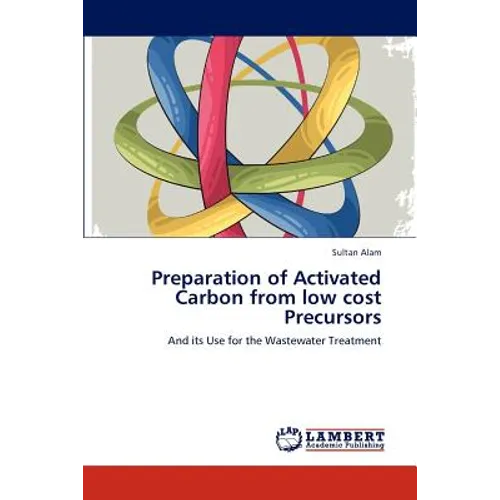
Preparation of Activated Carbon from low cost Precursors - Paperback

$122.87
$122.87
Sale Sold out
Shipping calculated at checkout.
In stock (100 units), ready to be shipped

Available Offers

Fastest Delivery Tomorrow With Vip DealOrder within 1 hr 8 mins.

Instant 10% Discount On HDFC Banks Credit/Debit Cards EMI and CreditCard

Secure checkout with
  • American Express
  • Apple Pay
  • Diners Club
  • Discover
  • Google Pay
  • Mastercard
  • PayPal
  • Shop Pay
  • Visa

Flight Range: Up to 1,000 meters (3,280 feet)

Maximum Speed: 45 kilometers per hour (28 miles per hour)

For all orders exceeding a value of 100USD shipping is offered for free.

Returns will be accepted for up to 10 days of Customer’s receipt or tracking number on unworn items. You, as a Customer, are obliged to inform us via email before you return the item.

Otherwise, standard shipping charges apply. Check out our delivery Terms & Conditions for more details.

View Product Details
Shopping cart
Product Product subtotal Quantity Price Product subtotal
Preparation of Activated Carbon from low cost Precursors - Paperback
$122.87/ea
$0.00
$122.87/ea $0.00

Product Description

by Sultan Alam (Author)

Low cost agricultural waste material and animal bones were utilized for the preparation of activated carbon. Industrial spent carbon was also regenerated. The carbon samples were activated chemically and by thermal means (400-1000 C). The samples were characterized by surface area (BET, DR, BJH, Langmuir) with pore volume, FTIR, XRD, SEM and EDS. The rate of adsorption of dyes on the carbon samples was high in the initial fifteen seconds and then declined due to its diffusion in to the micropores. Negative values of entropy of activation (ΔS#) of the dyes adsorption reflected the affinity of the dye molecules towards the carbon surface which were found to decrease with the increase in adsorption temperature. The linear plots of Bangham and intraparticle diffusion models showed that the adsorption of dye on the carbon surface is a diffusion controlled process. The Freundlich, Langmuir and DR models were used to estimate the adsorption parameters. The best fit of the isotherms, found from the correlation coefficients (r2) were in the sequence: DR

Number of Pages: 696
Dimensions: 1.53 x 9 x 6 IN
Publication Date: March 27, 2012
you might like