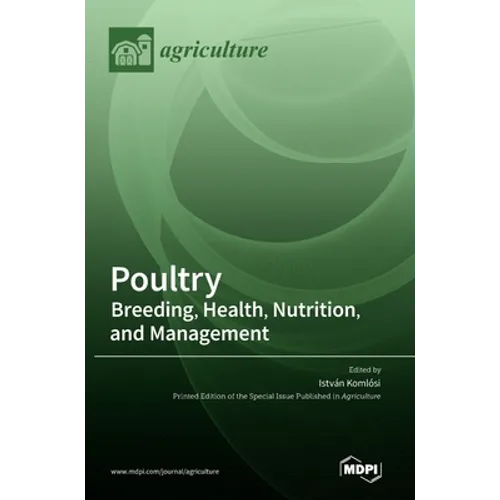
Poultry: Breeding, Health, Nutrition, and Management - Hardcover
Available Offers
Fastest Delivery Tomorrow With Vip DealOrder within 1 hr 8 mins.
Instant 10% Discount On HDFC Banks Credit/Debit Cards EMI and CreditCard
Couldn't load pickup availability
Product Details
Flight Range: Up to 1,000 meters (3,280 feet)
Maximum Speed: 45 kilometers per hour (28 miles per hour)
Shipping And Return
For all orders exceeding a value of 100USD shipping is offered for free.
Returns will be accepted for up to 10 days of Customer’s receipt or tracking number on unworn items. You, as a Customer, are obliged to inform us via email before you return the item.
Otherwise, standard shipping charges apply. Check out our delivery Terms & Conditions for more details.
Product Description
by Istvan Komlosi (Editor)
Being the largest animal protein producer, the poultry industry is in the focus of mixed-diet consumers (from a welfare point of view, as a medium of functional foods, environmental issues, the use of antibiotics, etc.), as well as the livestock industry in general. The poultry industry is also extremely quick to uptake new technologies (such as biotechnology, mechanization, robotics, and climate and nutrient control) in order to be economically efficient and sustainable. There is constant pressure from pathogens and new threats, such as avian flu, that requires new treatments and biosecurity measures. There are many novel approaches and answers to these challenges. In breeding, molecular genetic tools (genomic selection and genome editing) can be used to increase production efficiency and fitness, especially immunity traits, or to characterize local genetic pools. The One Health approach, which requires a holistic approach, where genetics, nutrition, health treatment, and management need to be considered together, has gained ground in the poultry industry. The gut microbiome seems to be a good indicator of the balanced health of an animal. Artificial intelligence, built into robotic supervision and handling, helps to increase animal comfort and save costs in the workforce. Organic farming takes a different approach and faces different challenges. What could the possible answers be? We are facing a new era in poultry science. The aim of this Special Issue is to highlight the importance of new findings.