Pesticides, Organic Contaminants, and Pathogens in Air: Chemodynamics, Health Effects, Sampling, and Analysis - Paperback
Available Offers
Fastest Delivery Tomorrow With Vip DealOrder within 1 hr 8 mins.
Instant 10% Discount On HDFC Banks Credit/Debit Cards EMI and CreditCard
Couldn't load pickup availability
Product Details
Flight Range: Up to 1,000 meters (3,280 feet)
Maximum Speed: 45 kilometers per hour (28 miles per hour)
Shipping And Return
For all orders exceeding a value of 100USD shipping is offered for free.
Returns will be accepted for up to 10 days of Customer’s receipt or tracking number on unworn items. You, as a Customer, are obliged to inform us via email before you return the item.
Otherwise, standard shipping charges apply. Check out our delivery Terms & Conditions for more details.
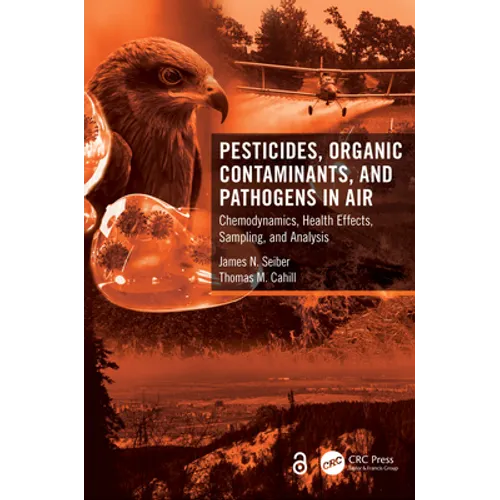
Product Description
by James N. Seiber (Author), Thomas M. Cahill (Author)
The air is an important but largely unrecognized source of contaminant fate in the environment, including transport of pesticides and contaminants to nontarget areas and exposures for people and wildlife. This book summarizes and places in perspective the potential transport, transformation, and health implications of pesticides and contaminants in air, including the air we breathe. It delves into the hypothesis that the atmosphere is the most significant environmental compartment affecting the overall transport and fate of many classes of environmental contaminants.
The authors draw parallels between sampling, analysis, and impact of airborne toxics and particulate matter with the COVID-19 pandemic. Airborne viruses and fine particulate matter, which are of similar size, have remarkable parallels in how they are transmitted and accumulated in the respiratory tract.
FEATURES
- Assesses exposures of people and wildlife to airborne chemicals
- Includes case study applications, with relevant data summarized for pesticides and contaminants in air
- Discusses approaches to modeling pesticides' and contaminants' dispersion and fate in air
- Includes an assessment of the physicochemical properties of pesticides and contaminants that influence sampling and atmospheric mobility and fate
The authors are global experts in air contaminant research, and this book is well organized and helpful for people interested in regulatory, health, and other topics related to pesticides and contaminants in air.
James N. Seiber is a Professor Emeritus at the University of California, Davis.
Thomas M. Cahill is an Associate Professor in the School of Mathematical and Natural Sciences at Arizona State University.