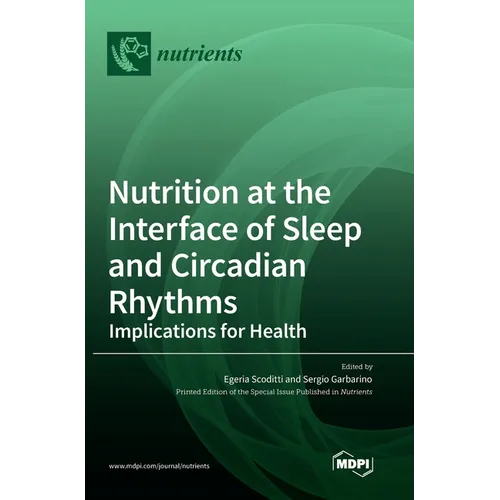
Nutrition at the Interface of Sleep and Circadian Rhythms: Implications for Health - Hardcover
Available Offers
Fastest Delivery Tomorrow With Vip DealOrder within 1 hr 8 mins.
Instant 10% Discount On HDFC Banks Credit/Debit Cards EMI and CreditCard
Couldn't load pickup availability
Product Details
Flight Range: Up to 1,000 meters (3,280 feet)
Maximum Speed: 45 kilometers per hour (28 miles per hour)
Shipping And Return
For all orders exceeding a value of 100USD shipping is offered for free.
Returns will be accepted for up to 10 days of Customer’s receipt or tracking number on unworn items. You, as a Customer, are obliged to inform us via email before you return the item.
Otherwise, standard shipping charges apply. Check out our delivery Terms & Conditions for more details.

Product Description
by Egeria Scoditti (Guest Editor), Sergio Garbarino (Guest Editor)
An integral part of homeostasis includes daily rhythms in physiology, behavior, and metabolism. The circadian timing system enables organisms to adapt their biological functions to the cyclic nature of the Earth. Sleep is a fundamental physiological function, playing a crucial role in physical, mental and emotional health. Alterations of sleep quality and quantity caused by modern lifestyle and behavior as well sleep disorders are associated with an increased risk for chronic diseases. Chronic misalignment of endogenous rhythms can also lead to metabolic dysfunction. Research is starting to demonstrate the complex interrelationship between nutrition, sleep and the circadian system. For example, some foods and nutrients may impact the availability of substances that influence sleep. On the other hand, inadequate sleep is associated with an unhealthy nutrient intake and altered metabolism. Nutrients can act as drivers of circadian rhythms; they have the ability to influence circadian regulation and alter biological functions in specific tissues. A lacuna still exists in the knowledge surrounding the interplay of nutrition with sleep and the circadian system. In light of this, novel opportunities are disclosed for developing tailored nutritional recommendations with beneficial effects on sleep and circadian rhythmicity so as to improve life quality and prevent disease. The purpose of this Special Issue is therefore to collect contributions regarding this interplay and the related clinical implications.