No More to Spend: Neglect and the Construction of Scarcity in Malawi's History of Health Care - Hardcover
Available Offers
Fastest Delivery Tomorrow With Vip DealOrder within 1 hr 8 mins.
Instant 10% Discount On HDFC Banks Credit/Debit Cards EMI and CreditCard
Couldn't load pickup availability
Product Details
Flight Range: Up to 1,000 meters (3,280 feet)
Maximum Speed: 45 kilometers per hour (28 miles per hour)
Shipping And Return
For all orders exceeding a value of 100USD shipping is offered for free.
Returns will be accepted for up to 10 days of Customer’s receipt or tracking number on unworn items. You, as a Customer, are obliged to inform us via email before you return the item.
Otherwise, standard shipping charges apply. Check out our delivery Terms & Conditions for more details.
Product Description
by Luke Messac (Author)
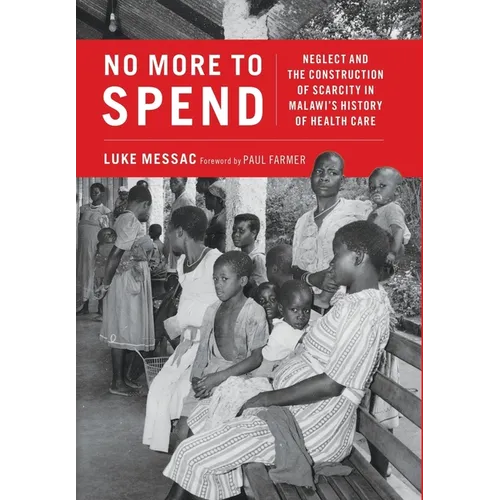
Dismal spending on government health services is often considered a necessary consequence of a low per-capita GDP, but are poor patients in poor countries really fated to be denied the fruits of modern medicine? In many countries, officials speak of proper health care as a luxury, and convincing politicians to ensure citizens have access to quality health services is a constant struggle. Yet, in many of the poorest nations, health care has long received a tiny share of public spending. Colonial and postcolonial governments alike have used political, rhetorical, and even martial campaigns to rebuff demands by patients and health professionals for improved medical provision, even when more funds were available.
No More to Spend challenges the inevitability of inadequate social services in twentieth-century Africa, focusing on the political history of Malawi. Using the stories of doctors, patients, and political leaders, Luke Messac demonstrates how both colonial and postcolonial administrations in this nation used claims of scarcity to justify the poor state of health care. During periods of burgeoning global discourse on welfare and social protection, forestalling improvements in health care required varied forms of rationalization and denial. Calls for better medical care compelled governments, like that of Malawi, to either increase public health spending or offer reasons for their inaction. Because medical care is still sparse in many regions in Africa, the recurring tactics for prolonged neglect have important implications for global health today.Author Biography
Luke Messac is a resident in emergency medicine at Brown University. He received his M.D. and Ph.D. (History and the Sociology of Science) from the University of Pennsylvania.