Mesopotamia: The Truth: what was really happening in the 'cradle of civilisation' - Paperback
Available Offers
Fastest Delivery Tomorrow With Vip DealOrder within 1 hr 8 mins.
Instant 10% Discount On HDFC Banks Credit/Debit Cards EMI and CreditCard
Couldn't load pickup availability
Product Details
Flight Range: Up to 1,000 meters (3,280 feet)
Maximum Speed: 45 kilometers per hour (28 miles per hour)
Shipping And Return
For all orders exceeding a value of 100USD shipping is offered for free.
Returns will be accepted for up to 10 days of Customer’s receipt or tracking number on unworn items. You, as a Customer, are obliged to inform us via email before you return the item.
Otherwise, standard shipping charges apply. Check out our delivery Terms & Conditions for more details.

Product Description
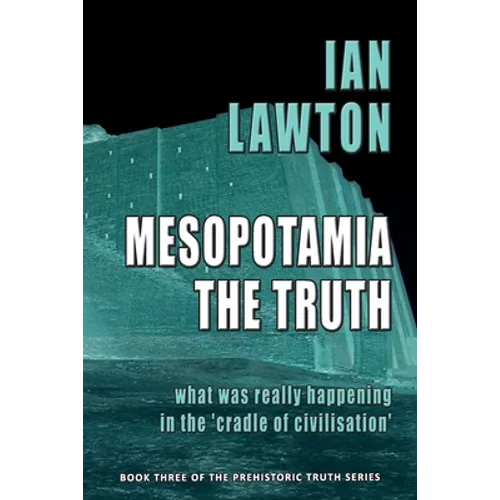
by Ian Lawton (Author)
Ancient Mesopotamia... perhaps the definitive cradle of civilisation.
Who discovered its various remains? What did they find?
And what does the archaeological and textual evidence tell us about the elements of modern living that were introduced for the first time...
as much as 5000 years ago?
Several hundred years ago many people believed that Old Testament cities such as Ur, Erech and Nineveh were simply fabrications. But then from the middle of the nineteenth century a succession of intrepid archaeologists began to discover the ruins not only of these three sizeable cities, but of others too - such as Eridu, Lagash, Nippur, Shuruppak and Kish. We can thank trailblazers such as Austen Henry Layard, Henry Creswicke Rawlinson and Leonard Woolley for revealing the magnificent buildings and streetscapes of these earliest 'city-states'.
They also discovered some of the oldest literary texts in the world, written on clay tablets using early pictographic script and, later, the distinctively tight-packed cuneiform. These were then painstakingly deciphered by scholars such as Edward Hincks, Jules Oppert, Alexander Heidel, Samuel Noah Kramer, Thorkild Jacobsen and Stephanie Dalley, revealing historical details of not just the later Assyro-Babylonian civilisation, but also its earlier Akkadian and even earlier Sumerian forerunners. They recount too the mythological adventures of gods such as An, Enki, Enlil, Ninhursag, Inanna, Ninlil, Ninurta and Marduk, and the epic adventures of heroes such as Atrahasis, Adapa, Etana and Gilgamesh. Perhaps even more important we learn that the biblical story of the flood and its hero Noah was based on precedents that predated it by as much as several thousand years.
Nor can we discuss these texts without mentioning the former New York journalist Zecharia Sitchin, who reinterpreted them to claim that humankind was genetically created by extraterrestrial visitors called the 'Anunnaki' from the planet 'Nibiru'. The books in his Earth Chronicles series have sold in their millions all around the globe, and his work still exerts a strong influence on alternative researchers and audiences today. But was he really, as he claimed, one of the few scholars to be able to interpret early Sumerian and later Akkadian script... or was he wowing his worldwide army of followers with what he knew to be works of complete fiction?