


Product Description
by Peng Wang (Author), David B. Sawyer (Author)
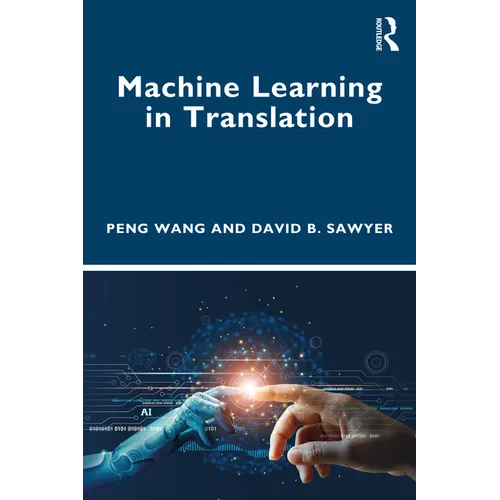
Machine Learning in Translation introduces machine learning (ML) theories and technologies that are most relevant to translation processes, approaching the topic from a human perspective and emphasizing that ML and ML-driven technologies are tools for humans.
Providing an exploration of the common ground between human and machine learning and of the nature of translation that leverages this new dimension, this book helps linguists, translators, and localizers better find their added value in a ML-driven translation environment. Part One explores how humans and machines approach the problem of translation in their own particular ways, in terms of word embeddings, chunking of larger meaning units, and prediction in translation based upon the broader context. Part Two introduces key tasks, including machine translation, translation quality assessment and quality estimation, and other Natural Language Processing (NLP) tasks in translation. Part Three focuses on the role of data in both human and machine learning processes. It proposes that a translator's unique value lies in the capability to create, manage, and leverage language data in different ML tasks in the translation process. It outlines new knowledge and skills that need to be incorporated into traditional translation education in the machine learning era. The book concludes with a discussion of human-centered machine learning in translation, stressing the need to empower translators with ML knowledge, through communication with ML users, developers, and programmers, and with opportunities for continuous learning.
This accessible guide is designed for current and future users of ML technologies in localization workflows, including students on courses in translation and localization, language technology, and related areas. It supports the professional development of translation practitioners, so that they can fully utilize ML technologies and design their own human-centered ML-driven translation workflows and NLP tasks.
Author Biography
Peng Wang is a freelance conference interpreter with the Translation Bureau, Public Works and Government Services Canada, a part-time professor in the School of Translation and Interpretation, University of Ottawa and Course designer and instructor for Think NLP and Machine Translation Masterclass at the Localization Institute. She has published two books in Chinese, including Harry Potter and Its Chinese Translation.
David B. Sawyer is Director of Language Testing at the U.S. State Department's Foreign Service Institute and a Senior Lecturer at the University of Maryland, USA. He is the author of Foundations of Interpreter Education: Curriculum and Assessment and co-editor of The Evolving Curriculum in Interpreter and Translator Education: Stakeholder Perspectives and Voices (both John Benjamins).



