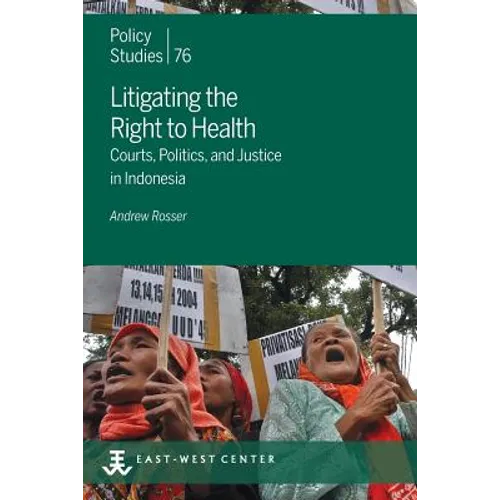
Litigating the Right to Health: Courts, Politics, and Justice in Indonesia - Paperback
Available Offers
Fastest Delivery Tomorrow With Vip DealOrder within 1 hr 8 mins.
Instant 10% Discount On HDFC Banks Credit/Debit Cards EMI and CreditCard
Couldn't load pickup availability
Product Details
Flight Range: Up to 1,000 meters (3,280 feet)
Maximum Speed: 45 kilometers per hour (28 miles per hour)
Shipping And Return
For all orders exceeding a value of 100USD shipping is offered for free.
Returns will be accepted for up to 10 days of Customer’s receipt or tracking number on unworn items. You, as a Customer, are obliged to inform us via email before you return the item.
Otherwise, standard shipping charges apply. Check out our delivery Terms & Conditions for more details.
Product Description
by Andrew Rosser (Author)
Recent increases in health rights litigation in low- and middle-income countries triggered debates regarding the effects of such litigation on the equity and effectiveness of health systems. Proponents argued that such litigation promotes health rights by holding governments accountable. Critics claimed that, as such litigation is employed mostly by the middle-class, it leads to regressive health spending and access. A third group suggested that results depend on whether such litigation is individually or collectively focused--with individually focused litigation helping only individuals while collectively focused litigation potentially helps larger numbers. This study examines Indonesia's experience with health rights litigation and efforts promoting health rights in developing countries in general. The fall of Indonesia's New Order triggered changes in the 1945 constitution and new legislation strengthening the nation's right to health. This encouraged Indonesians to demand health-related entitlements in court. This study argues that such litigation promotes health rights by precipitating policy changes. This study points to broader preconditions for rights-friendly changes. It contends that collectively focused litigation drives progressive effects when there is some degree of elite responsiveness; when actors, resources, and alliances enabling legal mobilization exist; and when legal mobilization occurs in the context of wider political mobilizations.