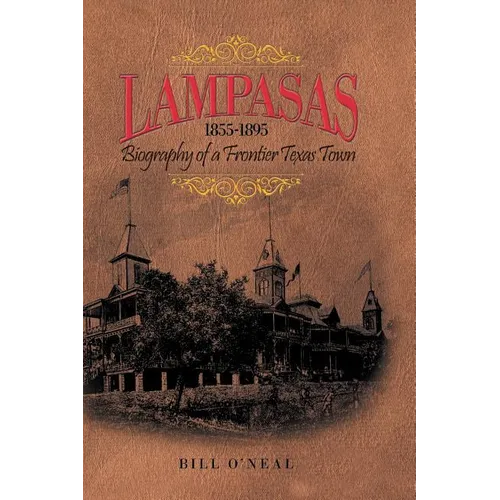
Lampasas 1855-1895: Biography of a Frontier City - Hardcover
Available Offers
Fastest Delivery Tomorrow With Vip DealOrder within 1 hr 8 mins.
Instant 10% Discount On HDFC Banks Credit/Debit Cards EMI and CreditCard
Couldn't load pickup availability
Product Details
Flight Range: Up to 1,000 meters (3,280 feet)
Maximum Speed: 45 kilometers per hour (28 miles per hour)
Shipping And Return
For all orders exceeding a value of 100USD shipping is offered for free.
Returns will be accepted for up to 10 days of Customer’s receipt or tracking number on unworn items. You, as a Customer, are obliged to inform us via email before you return the item.
Otherwise, standard shipping charges apply. Check out our delivery Terms & Conditions for more details.
Product Description
by Bill O'Neal (Author)
For nearly three decades, the settlers of Lampasas were challenged by frontier hardships and dangers. The isolated Hill Country community was founded in the 1850s amid bubbling mineral springs, During summer "watering seasons," hundreds of Texans made their way through the wilderness to "take the waters" at Lampasas Springs. Most of the summer visitors camped for weeks in shady groves beside the springs-enjoying such simple recreations as visiting, singing, communal meals, and preaching services-while children swam and played in large gangs. Lampasas merchants learned to rely upon an annual surge of business, as the population doubled and sometimes tripled each summer. During the town's formative years, Lampasans endured Comanche raids, numerous saloon shootouts, a vicious blood feud, stock theft, lynchings, stagecoach robberies and conflict between cattlemen and sheepherders. Trail drives paused at Lampasas Springs, and area drovers herded cattle up from the famous trails as the cowboy culture permeated Lampasas. Trail boss Pink Higgins became a gunfighter of the front rank, the Horrell brothers were notorious cattle rustlers, and the Horrells triggered a saloon fight unique in the annals of frontier violence. The long frontier era ended when railroad tracks reached Lampasas in 1882. The magnificent Park Hotel was built as the centerpiece of a 200-acre park, which for a few years became the leading resort in Texas. Statewide political and denominational conventions were held at the "Saratoga of the South." The Texas Bankers Association organized at the Park Hotel, and the Daughters of the Republic of Texas adopted their name during a Lampasas meeting. The Texas Sate Guard, forerunner of the National Guard, held its first two statewide encampments on the spacious grounds of the Park Hotel. The urban pioneers of the frontier Lampasas enjoyed a Victorian heyday through the glamour of the Saratoga of the South.