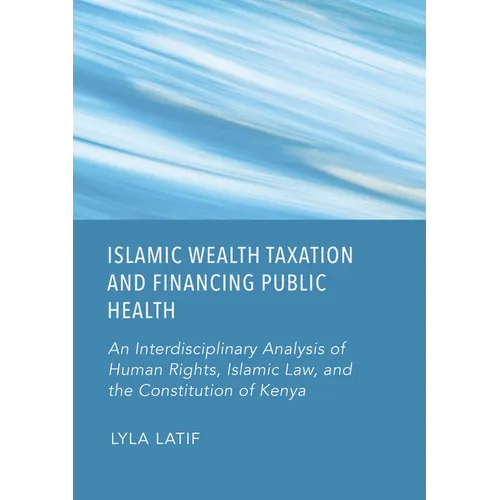
Islamic Wealth Taxation and Financing Public Health: An Interdisciplinary Analysis of Human Rights, Islamic Law, and the Constitution of Kenya - Hardcover
Available Offers
Fastest Delivery Tomorrow With Vip DealOrder within 1 hr 8 mins.
Instant 10% Discount On HDFC Banks Credit/Debit Cards EMI and CreditCard
Couldn't load pickup availability
Product Details
Flight Range: Up to 1,000 meters (3,280 feet)
Maximum Speed: 45 kilometers per hour (28 miles per hour)
Shipping And Return
For all orders exceeding a value of 100USD shipping is offered for free.
Returns will be accepted for up to 10 days of Customer’s receipt or tracking number on unworn items. You, as a Customer, are obliged to inform us via email before you return the item.
Otherwise, standard shipping charges apply. Check out our delivery Terms & Conditions for more details.
Product Description
by Lyla Latif (Author)
Islamic Wealth Taxation and Financing Public Health is an eye-opening and thought-provoking book that boldly explores new possibilities for funding public health initiatives in countries where Islam isn't the predominant religion. In this case, Kenya serves as the focal point. Written by a Pan-African Muslim woman, this book is a must-read for anyone curious about innovative ways to improve public health without overburdening taxpayers.
The author delves into the concept of zakat, an Islamic wealth tax, and investigates how it could be used as a source of revenue to boost public health in non-Islamic states like Kenya. By shedding light on the inner workings of the Kenyan legal system, the book highlights the importance of understanding local power dynamics, cultural and religious beliefs, and political structures when examining legal issues.
It's a fascinating look at how different legal frameworks can come together to tackle complex challenges, which brings together insights from human rights law, Islamic law, and constitutional law, showcasing the potential for interdisciplinary collaboration in solving real-world problems.
One of the reasons this book is so timely and important is its alignment with global development goals, such as the United Nations Sustainable Development Goals (SDGs), the African Union Agenda 2063, and National Development Plans. These initiatives all emphasise the need for countries to find new, local funding sources without overtaxing their citizens. Exploring zakat as a potential solution in Kenya is particularly interesting, given the country's influence in East Africa and the potential impact of such a development in the region.