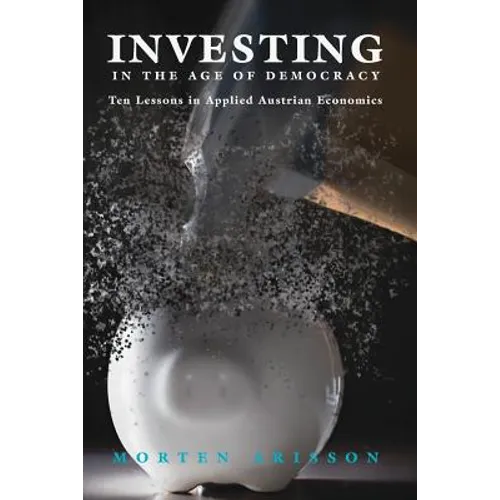
Product Description
by Morten Arisson (Author)
This book offers a structured, deductive approach to Austrian investing, beginning with an analysis of the current investing paradigm. There are five economic concepts on which the Austrian School of Economics has a unique view: Entrepreneurship, Class Probability, Capital, the Interest Rate, and Institutions. This book explains, lesson by lesson, how each of theseshapes our thinking about investing. If we follow them through their logical consequences, they leave us with a unique approach to investing. Except for the theory of probability, there has not been a comprehensive analysis of the linkages between these concepts, when it comes to investing. Although they would have been obvious to the average investor before the age of democracy, since the French and American revolutions, government interventions have steadily transformed the way we think about them (and the way we invest). Above all, Entrepreneurship and Institutions are downplayed today, while investors use Case Probability, and confuse the concepts of Money and Capital.
This book offers a historical review of these interventions, to shed light on how we went from what was common sense to the status quo. Offering a sometimes technical analysis, the book examines a series of fundamental investment fallacies, their origins and how not to fall for them.
Back Jacket
This book offers a structured, deductive approach to Austrian investing, beginning with an analysis of the current investing paradigm. There are five economic concepts on which the Austrian School of Economics has a unique view: Entrepreneurship, Class Probability, Capital, the Interest Rate, and Institutions. This book explains, lesson by lesson, how each of theseshapes our thinking about investing. If we follow them through their logical consequences, they leave us with a unique approach to investing. Except for the theory of probability, there has not been a comprehensive analysis of the linkages between these concepts, when it comes to investing. Although they would have been obvious to the average investor before the age of democracy, since the French and American revolutions, government interventions have steadily transformed the way we think about them (and the way we invest). Above all, Entrepreneurship and Institutions are downplayed today, while investors use Case Probability, and confuse the concepts of Money and Capital.
This book offers a historical review of these interventions, to shed light on how we went from what was common sense to the status quo. Offering a sometimes technical analysis, the book examines a series of fundamental investment fallacies, their origins and how not to fall for them.
Author Biography
Morten Arisson is a Canadian economist, with a Master's Degree in Business Administration. He has experience in credit portfolio management, private equity and strategy consulting.