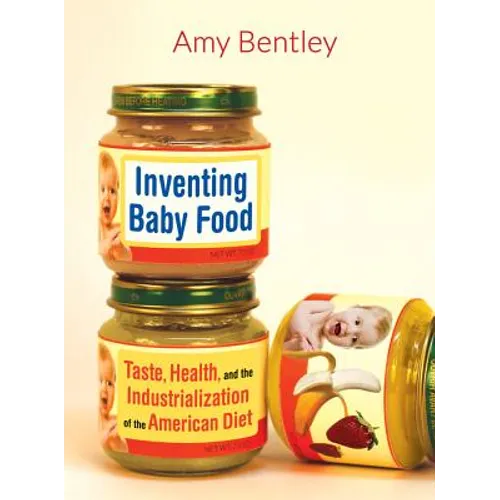
Inventing Baby Food: Taste, Health, and the Industrialization of the American Diet Volume 51 - Paperback
Available Offers
Fastest Delivery Tomorrow With Vip DealOrder within 1 hr 8 mins.
Instant 10% Discount On HDFC Banks Credit/Debit Cards EMI and CreditCard
Couldn't load pickup availability
Product Details
Flight Range: Up to 1,000 meters (3,280 feet)
Maximum Speed: 45 kilometers per hour (28 miles per hour)
Shipping And Return
For all orders exceeding a value of 100USD shipping is offered for free.
Returns will be accepted for up to 10 days of Customer’s receipt or tracking number on unworn items. You, as a Customer, are obliged to inform us via email before you return the item.
Otherwise, standard shipping charges apply. Check out our delivery Terms & Conditions for more details.
Product Description
by Amy Bentley (Author)
Food consumption is a significant and complex social activity--and what a society chooses to feed its children reveals much about its tastes and ideas regarding health. In this groundbreaking historical work, Amy Bentley explores how the invention of commercial baby food shaped American notions of infancy and influenced the evolution of parental and pediatric care.
Until the late nineteenth century, infants were almost exclusively fed breast milk. But over the course of a few short decades, Americans began feeding their babies formula and solid foods, frequently as early as a few weeks after birth. By the 1950s, commercial baby food had become emblematic of all things modern in postwar America. Little jars of baby food were thought to resolve a multitude of problems in the domestic sphere: they reduced parental anxieties about nutrition and health; they made caretakers feel empowered; and they offered women entering the workforce an irresistible convenience. But these baby food products laden with sugar, salt, and starch also became a gateway to the industrialized diet that blossomed during this period. Today, baby food continues to be shaped by medical, commercial, and parenting trends. Baby food producers now contend with health and nutrition problems as well as the rise of alternative food movements. All of this matters because, as the author suggests, it's during infancy that American palates become acclimated to tastes and textures, including those of highly processed, minimally nutritious, and calorie-dense industrial food products.Front Jacket
Amy Bentley's engaging, brilliantly researched book is a revelation. Who knew that all those little baby food jars could tell us so much about the commercial, cultural, and personal history of food in America. Inventing Baby Food is an instant food studies classic. --Marion Nestle, author of Food Politics
"Food scholars who think infant feeding means burping babies on their mothers' shoulders should think again. Bentley shows how the corporate approach to babies' appetites rested on a shallow conception of babyhood and human taste. She also devotes attention to the changes in the past few decades, as longer breastfeeding and home-prepared foods have gained modest purchase. Her book leaves us better informed, perhaps even a little more optimistc." --Sidney Mintz, William L. Straus Jr. Professor Emeritus, Anthropology, Johns HopkinsAuthor Biography
Amy Bentley is Professor in the Department of Nutrition, Food Studies, and Public Health at New York University. She is the author of Eating for Victory: Food Rationing and the Politics of Domesticity and the editor of A Cultural History of Food in the Modern Era.