Influenza: A Century of Science and Public Health Response - Paperback
Available Offers
Fastest Delivery Tomorrow With Vip DealOrder within 1 hr 8 mins.
Instant 10% Discount On HDFC Banks Credit/Debit Cards EMI and CreditCard
Couldn't load pickup availability
Product Details
Flight Range: Up to 1,000 meters (3,280 feet)
Maximum Speed: 45 kilometers per hour (28 miles per hour)
Shipping And Return
For all orders exceeding a value of 100USD shipping is offered for free.
Returns will be accepted for up to 10 days of Customer’s receipt or tracking number on unworn items. You, as a Customer, are obliged to inform us via email before you return the item.
Otherwise, standard shipping charges apply. Check out our delivery Terms & Conditions for more details.
Product Description
by George Dehner (Author)
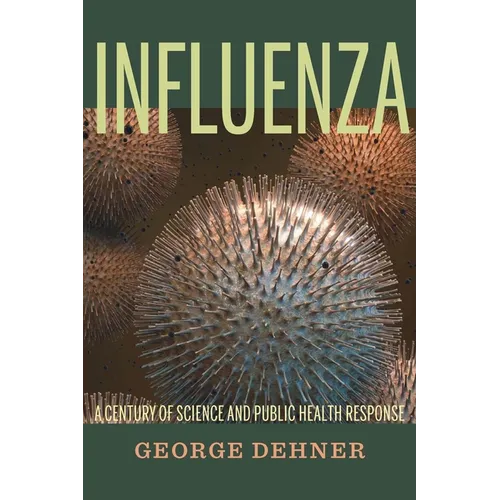
In 1976, the outbreak of a new strain of swine flu at the Fort Dix, New Jersey, army base prompted an unprecedented inoculation campaign. Some forty-two million Americans were vaccinated as the National Influenza Immunization Program hastened to prevent a pandemic, while the World Health Organization (WHO) took a wait-and-see approach. Fortunately, the virus did not spread, and only one death occurred. But instead of being lauded, American actions were subsequently denounced as a \u201cfiasco\u201d and instigator of mass panic.
In Influenza, George Dehner examines the wide disparity in national and international responses to influenza pandemics, from the Russian flu of 1889 to the swine flu outbreak in 2009. He chronicles the technological and institutional progress made along the way and shows how these developments can shape an effective future policy. Early pandemic response relied on methods of quarantine and individual scientific research. In the aftermath of World War II, a consensus for cooperation and shared resources led to the creation of the WHO, under the auspices of the United Nations. Today, the WHO maintains a large and proactive role in responding to influenza outbreaks. International pandemic response, however, is only as strong as its weakest national link--most recently evidenced in the failed early detection of the 2009 swine flu in Mexico and the delayed reporting of the 2002 SARS outbreak in China. As Dehner s study contends, the hard lessons of the past highlight the need for a coordinated early warning system with full disclosure, shared technologies, and robust manufacturing capabilities. Until the \u201cnational\u201d aspect can be removed from the international equation, responses will be hampered, and a threat to an individual remains a threat to all.Author Biography
George Dehner is associate professor of history at Wichita State University.