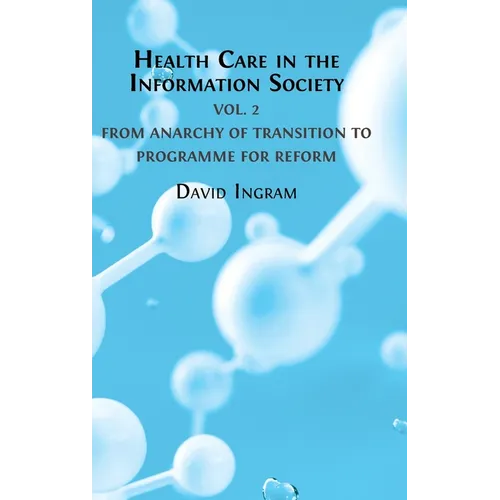
Health Care in the Information Society: Volume 2: From Anarchy of Transition to Programme for Reform - Hardcover
Available Offers
Fastest Delivery Tomorrow With Vip DealOrder within 1 hr 8 mins.
Instant 10% Discount On HDFC Banks Credit/Debit Cards EMI and CreditCard
Couldn't load pickup availability
Product Details
Flight Range: Up to 1,000 meters (3,280 feet)
Maximum Speed: 45 kilometers per hour (28 miles per hour)
Shipping And Return
For all orders exceeding a value of 100USD shipping is offered for free.
Returns will be accepted for up to 10 days of Customer’s receipt or tracking number on unworn items. You, as a Customer, are obliged to inform us via email before you return the item.
Otherwise, standard shipping charges apply. Check out our delivery Terms & Conditions for more details.
Product Description
by David Ingram (Author)
In this fascinating book David Ingram traces the history of information technology and health informatics from its pioneers in the middle of the twentieth century to its latest developments.
The book is distinctive in its broad scope and coverage and as the eyewitness account of an author who became the first UK professor appointed with the mission to bridge information technology with everyday medicine, health, and care. In this role, he has been a co-founder and leader of two rapidly growing initiatives, openEHR and OpenEyes, which stem from international collaborations of universities, health services and industries. These open source and open platform technologies have struck a widely resonant chord worldwide through their focus on community interest endeavours and open access to their methods and outputs.
Set against the history of extremely costly, burdensome, and serially unsuccessful top-down attempts of governments to tackle the domain, the book argues for a greater focus on shared endeavours of this kind, contributing towards a standardized care information utility that incorporates methods and resources evolved, shared, and sustained in the public domain.
As information technologies are now at the very core of health care, shaping the relationship between medical services and communities, professions, organisations and industries this book is important reading for politicians, health care academics, administrators and providers, and to anybody interested in the future of health services in the digital age.