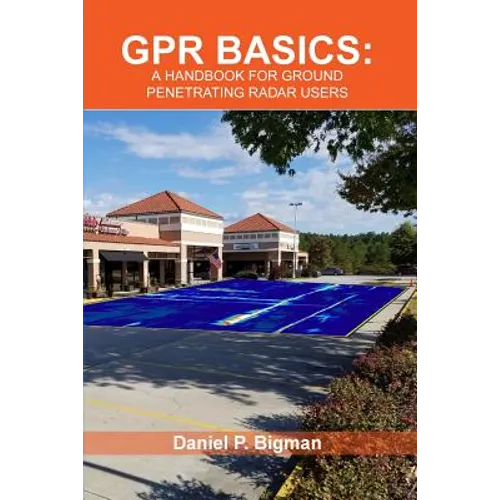
Gpr Basics: A Handbook for Ground Penetrating Radar Users - Paperback
Available Offers
Fastest Delivery Tomorrow With Vip DealOrder within 1 hr 8 mins.
Instant 10% Discount On HDFC Banks Credit/Debit Cards EMI and CreditCard
Couldn't load pickup availability
Product Details
Flight Range: Up to 1,000 meters (3,280 feet)
Maximum Speed: 45 kilometers per hour (28 miles per hour)
Shipping And Return
For all orders exceeding a value of 100USD shipping is offered for free.
Returns will be accepted for up to 10 days of Customer’s receipt or tracking number on unworn items. You, as a Customer, are obliged to inform us via email before you return the item.
Otherwise, standard shipping charges apply. Check out our delivery Terms & Conditions for more details.
Product Description
by Daniel P. Bigman (Author)
GPR Basics: A Handbook for Ground Penetrating Radar Users was written to help you gain an understanding of the fundamentals of ground penetrating radar and develop the confidence to appropriately utilize this technology. This book is organized in an approachable format that minimizes technical jargon and math. LearnGPR is known for its ease of training without compromising the quality and this book is no different. After reading this book you will understand how GPR works, recognize the limitations of the technology, increase survey success rates, expand the types of projects you can conduct, and feel confident speaking with both clients and industry professionals. The topics covered in this book include: -Electromagnetic Waves -GPR Antenna -Physical Properties of Materials -GPR Wave Behavior -Modeling GPR Signals -Data Interpretation -Data Visualization -Applications of GPR -Documenting and Reporting -Benefits and Limitations
Author Biography
Daniel Bigman, PhD is the president of Bigman Geophysical and the founder of LearnGPR. Dan received his doctorate from the University of Georgia and is an expert in non-invasive subsurface mapping and 3D imaging. His graduate research focused on the applications of near-surface geophysics to archaeological and historical contexts and has since taught at several universities in Georgia. He has collaborated with scholars across the southeastern United States on innovative research pertaining to applied geophysics and damage prevention. Dan continues to develop innovative training opportunities for GPR users across the world through the LearnGPR platform.