Fort Union and the Upper Missouri Fur Trade - Paperback
Available Offers
Fastest Delivery Tomorrow With Vip DealOrder within 1 hr 8 mins.
Instant 10% Discount On HDFC Banks Credit/Debit Cards EMI and CreditCard
Couldn't load pickup availability
Product Details
Flight Range: Up to 1,000 meters (3,280 feet)
Maximum Speed: 45 kilometers per hour (28 miles per hour)
Shipping And Return
For all orders exceeding a value of 100USD shipping is offered for free.
Returns will be accepted for up to 10 days of Customer’s receipt or tracking number on unworn items. You, as a Customer, are obliged to inform us via email before you return the item.
Otherwise, standard shipping charges apply. Check out our delivery Terms & Conditions for more details.

Product Description
by Barton H. Barbour (Author)
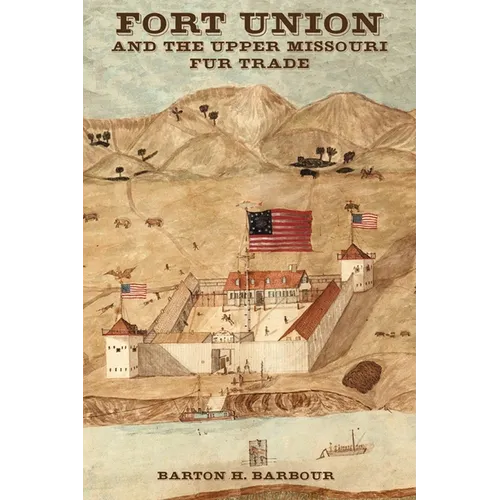
In this book, Barton Barbour presents the first comprehensive history of Fort Union, the nineteenth century's most important and longest-lived Upper Missouri River fur trading post. Barbour explores the economic, social, legal, cultural, and political significance of the fort which was the brainchild of Kenneth McKenzie and Pierre Chouteau, Jr., and a part of John Jacob Astor's fur trade empire.
From 1830 to 1867, Fort Union symbolized the power of New York and St. Louis, and later, St. Paul merchants' capital in the West. The most lucrative post on the northern plains, Fort Union affected national relations with a number of native tribes, such as the Assiniboine, Cree, Crow, Sioux, and Blackfeet. It also influenced American interactions with Great Britain, whose powerful Hudson's Bay Company competed for Upper Missouri furs.
Barbour shows how Indians, mixed-bloods, Hispanic-, African-, Anglo-, and other Euro-Americans living at Fort Union created a system of community law that helped maintain their unique frontier society. Many visiting artists and scientists produced a magnificent graphic and verbal record of events and people at the post, but the old-time world of fur traders and Indians collapsed during the Civil War when political winds shifted in favor of Lincoln's Republican Party.
In 1865 Chouteau lost his trade license and sold Fort Union to new operators, who had little interest in maintaining the post's former culture.