Skip to content
Welcome To Our Store.
100,000+ Products for Home, Medical, Office & Classroom Needs
Search
Skip to product information
1 of 1

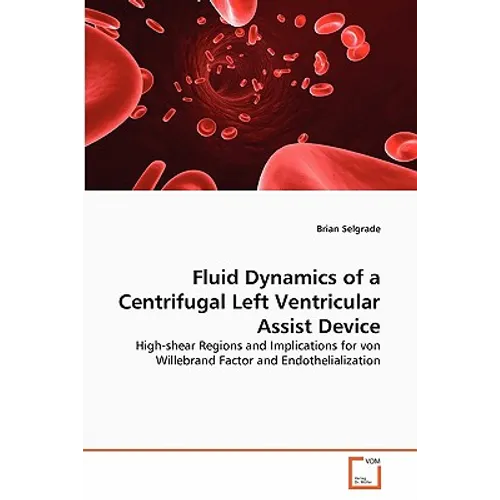
Fluid Dynamics of a Centrifugal Left Ventricular Assist Device - Paperback

$76.21
$76.21
Sale Sold out
Shipping calculated at checkout.
In stock (100 units), ready to be shipped

Available Offers

Fastest Delivery Tomorrow With Vip DealOrder within 1 hr 8 mins.

Instant 10% Discount On HDFC Banks Credit/Debit Cards EMI and CreditCard

Secure checkout with
  • American Express
  • Apple Pay
  • Diners Club
  • Discover
  • Google Pay
  • Mastercard
  • PayPal
  • Shop Pay
  • Visa

Flight Range: Up to 1,000 meters (3,280 feet)

Maximum Speed: 45 kilometers per hour (28 miles per hour)

For all orders exceeding a value of 100USD shipping is offered for free.

Returns will be accepted for up to 10 days of Customer’s receipt or tracking number on unworn items. You, as a Customer, are obliged to inform us via email before you return the item.

Otherwise, standard shipping charges apply. Check out our delivery Terms & Conditions for more details.

View Product Details
Shopping cart
Product Product subtotal Quantity Price Product subtotal
Fluid Dynamics of a Centrifugal Left Ventricular Assist Device - Paperback
$76.21/ea
$0.00
$76.21/ea $0.00

Product Description

by Brian Selgrade (Author)

High shear stresses and shear rates in left ventricular assist devices (LVADs) make endothelialization of the LVAD difficult and likely contribute to cleavage of large von Willebrand factor multimers and resulting bleeding problems in patients. To better understand shear in a centrifugal LVAD, flow was simulated using finite volume and computational fluid dynamics (CFD) analysis. The k-ω model simulated turbulence and sliding meshes were used to model the movement of the impeller. CFD results showed high-shear backflows in the radial gap between the impeller and the volute wall, but residence times in this region were under 5ms. It is unclear if this is sufficient to cleave VWF, and more study is necessary to determine if other areas in the LVAD have potential for VWF cleavage. Although the walls near the outlet experience low shear stress and may be good candidates for endothelialization, shear stresses above 20-30Pa on all other walls of the pump make the possibility of endothelial cell growth elsewhere in the LVAD unlikely. An LVAD designed specifically to have low shear may be a better candidate for endothelialization.

Number of Pages: 100
Dimensions: 0.24 x 9 x 6 IN
Publication Date: June 02, 2011
you might like