Essentials of Epidemiology in Public Health - Paperback
Available Offers
Fastest Delivery Tomorrow With Vip DealOrder within 1 hr 8 mins.
Instant 10% Discount On HDFC Banks Credit/Debit Cards EMI and CreditCard
Couldn't load pickup availability
Product Details
Flight Range: Up to 1,000 meters (3,280 feet)
Maximum Speed: 45 kilometers per hour (28 miles per hour)
Shipping And Return
For all orders exceeding a value of 100USD shipping is offered for free.
Returns will be accepted for up to 10 days of Customer’s receipt or tracking number on unworn items. You, as a Customer, are obliged to inform us via email before you return the item.
Otherwise, standard shipping charges apply. Check out our delivery Terms & Conditions for more details.
Product Description
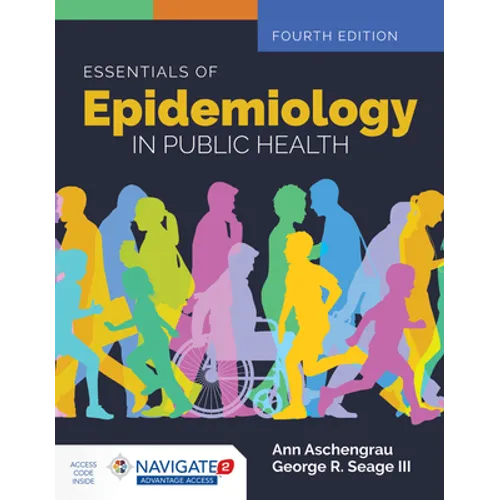
by Ann Aschengrau (Author), George R. Seage (Author)
Essentials of Epidemiology in Public Health, Fourth Edition combines theory and practice in presenting traditional and new epidemiologic concepts. Broad in scope, the text opens with five chapters covering the basic epidemiologic concepts and data sources. A major emphasis is placed on study design, with separate chapters devoted to each of the three main analytic designs: experimental, cohort, and case-control studies. Full chapters on bias, confounding, and random error, including the role of statistics in epidemiology, ensure that students are well-equipped with the necessary information to interpret the results of epidemiologic studies. Up-to-date examples from the epidemiologic literature on diseases of public health importance are provided throughout the book. Key Features: - New examples and the latest public health statistics throughout - Coverage of the Ebola outbreak including an in-depth investigation of what happened - New examples that illustrate epidemiological principles including a greater emphasis on social factors that influence health, such as racism - Straightforward descriptions of the latest epidemiologic methods including mediation analysis, agent-based modelling, and the use of directed acyclic graphs (DAGs) to assess confounding. - An expanded glossary and key terms highlighted throughout the text