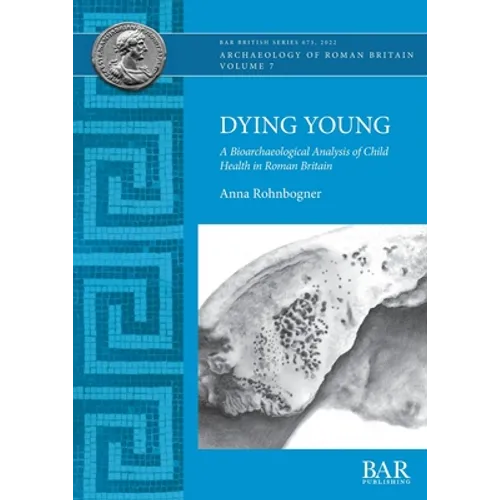
Dying Young: A Bioarchaeological Analysis of Child Health in Roman Britain - Paperback
Available Offers
Fastest Delivery Tomorrow With Vip DealOrder within 1 hr 8 mins.
Instant 10% Discount On HDFC Banks Credit/Debit Cards EMI and CreditCard
Couldn't load pickup availability
Product Details
Flight Range: Up to 1,000 meters (3,280 feet)
Maximum Speed: 45 kilometers per hour (28 miles per hour)
Shipping And Return
For all orders exceeding a value of 100USD shipping is offered for free.
Returns will be accepted for up to 10 days of Customer’s receipt or tracking number on unworn items. You, as a Customer, are obliged to inform us via email before you return the item.
Otherwise, standard shipping charges apply. Check out our delivery Terms & Conditions for more details.
Product Description
by Anna Rohnbogner (Author)
Dying Young explores childhood morbidity and mortality during the 1st to 5th century AD. The detailed osteological analysis of 953 non-adult (0 - 17 years) skeletons from 15 sites paints a rich picture of the lived realities of Romano-British children in towns and settlements of the countryside. Health and disease are examined under the themes of infant mortality, growth, diet, working lives, infection, access to resources and exploitation. Skeletal evidence indicates higher status of the urban population, which is in stark contrast to nutritional stress and a tough living environment in the countryside. The data suggests exploitation of the rural indigenous population, as well as rural-to-urban migration of adolescents, potentially in the search of work. Patterns in Romano-British childhood health are considered in context by comparison with similar studies for Iron Age and post-medieval periods. This volume highlights the importance of skeletons, particularly those of non-adults, as a multi-faceted resource for understanding the forgotten and marginalised people of Roman Britain.