Doctors at the Borders: Immigration and the Rise of Public Health - Hardcover
Available Offers
Fastest Delivery Tomorrow With Vip DealOrder within 1 hr 8 mins.
Instant 10% Discount On HDFC Banks Credit/Debit Cards EMI and CreditCard
Couldn't load pickup availability
Product Details
Flight Range: Up to 1,000 meters (3,280 feet)
Maximum Speed: 45 kilometers per hour (28 miles per hour)
Shipping And Return
For all orders exceeding a value of 100USD shipping is offered for free.
Returns will be accepted for up to 10 days of Customer’s receipt or tracking number on unworn items. You, as a Customer, are obliged to inform us via email before you return the item.
Otherwise, standard shipping charges apply. Check out our delivery Terms & Conditions for more details.
Product Description
by Michael C. Lemay (Author)
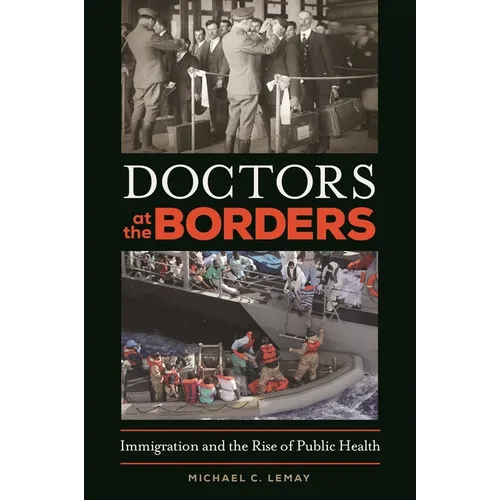
A unique resource for the general public and students interested in immigration and public health, this book presents a comprehensive history of public health and draws 10 key lessons for current immigration and health policymakers.
The period of 1820 to 1920 was one of mass migration to the United States from other nations of origin. This century-long period served to develop modern medicine with the acceptance of the germ theory of disease and the lessons learned from how immigration officials and doctors of the United States Marine Hospital Service (USMHS) confronted six major pandemic diseases: bubonic plague, cholera, influenza, smallpox, trachoma, and yellow fever. This book provides a narrative history that relates how immigration doctors of the USMHS developed devices and procedures that greatly influenced the development of public health. It illuminates the distinct links between immigration policy and public health policy and distinguishes ten key lessons learned nearly 100 years ago that are still relevant to coping with current public health policy issues. By re-examining the experiences of doctors at three U.S. immigration/quarantine stations--Angel Island, Ellis Island, and New Orleans--in the early 19th century through the early 20th century, Doctors at the Borders: Immigration and the Rise of Public Health analyzes the successes and failures of these medical practitioners' pioneering efforts to battle pandemic diseases and identifies how the hard-won knowledge from that relatively primitive period still informs how public health policy should be written today. Readers will understand how the USMHS doctors helped shape the very development of U.S. public health and modern scientific medicine, and see the need for international cooperation in the face of today's global threats of pandemic diseases.Author Biography
Michael C. LeMay, PhD, is professor emeritus of political science at California State University-San Bernardino (CSUSB), CA.