Product Description
by Virgil Henry Storr (Author), Ginny Seung Choi (Author)
The most damning criticism of markets is that they are morally corrupting. As we increasingly engage in market activity, the more likely we are to become selfish, corrupt, rapacious and debased. Even Adam Smith, who famously celebrated markets, believed that there were moral costs associated with life in market societies.
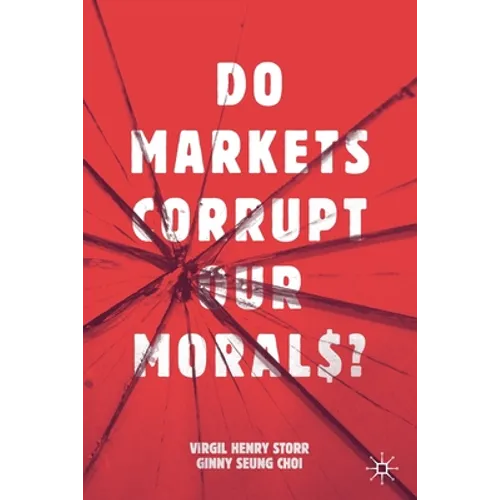
This book explores whether or not engaging in market activities is morally corrupting. Storr and Choi demonstrate that people in market societies are wealthier, healthier, happier and better connected than those in societies where markets are more restricted. More provocatively, they explain that successful markets require and produce virtuous participants. Markets serve as moral spaces that both rely on and reward their participants for being virtuous. Rather than harming individuals morally, the market is an arena where individuals are encouraged to be their best moral selves. Do Markets Corrupt Our Morals? invites us to reassess the claim that markets corrupt our morals.
Back Jacket
The most damning criticism of markets is that they are morally corrupting. As we increasingly engage in market activity, the more likely we are to become selfish, corrupt, rapacious and debased. Even Adam Smith, who famously celebrated markets, believed that there were moral costs associated with life in market societies.
This book explores whether or not engaging in market activities is morally corrupting. Storr and Choi demonstrate that people in market societies are wealthier, healthier, happier and better connected than those of societies where markets are more restricted. More provocatively, they explain that successful markets require and produce virtuous participants. Markets serve as moral spaces that both rely on and reward their participants for being virtuous. Rather than harming individuals morally, the market is an arena where individuals are encouraged to be their best moral selves. Do Markets Corrupt Our Morals? invites us to reassess the claim that markets corrupt our morals.
Author Biography
Virgil Henry Storr is Associate Professor of Economics at George Mason University and the Don C. Lavoie Senior Fellow in the F.A. Hayek Program in Philosophy, Politics and Economics at the Mercatus Center.
Ginny Seung Choi is Associate Director of Academic & Student Programs; a Senior Fellow in the F.A. Hayek Program for Advanced Study in Philosophy, Politics and Economics; and a Senior Research Fellow at the Mercatus Center at George Mason University. Previously, she was an Assistant Professor of Economics at Saint Vincent College.