Skip to content
Welcome To Our Store.
100,000+ Products for Home, Medical, Office & Classroom Needs
Search
Skip to product information
1 of 1

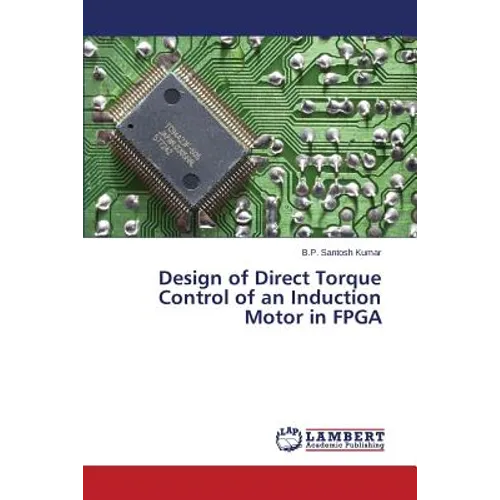
Design of Direct Torque Control of an Induction Motor in FPGA - Paperback

$62.05
$62.05
Sale Sold out
Shipping calculated at checkout.
In stock (100 units), ready to be shipped

Available Offers

Fastest Delivery Tomorrow With Vip DealOrder within 1 hr 8 mins.

Instant 10% Discount On HDFC Banks Credit/Debit Cards EMI and CreditCard

Secure checkout with
  • American Express
  • Apple Pay
  • Diners Club
  • Discover
  • Google Pay
  • Mastercard
  • PayPal
  • Shop Pay
  • Visa

Flight Range: Up to 1,000 meters (3,280 feet)

Maximum Speed: 45 kilometers per hour (28 miles per hour)

For all orders exceeding a value of 100USD shipping is offered for free.

Returns will be accepted for up to 10 days of Customer’s receipt or tracking number on unworn items. You, as a Customer, are obliged to inform us via email before you return the item.

Otherwise, standard shipping charges apply. Check out our delivery Terms & Conditions for more details.

View Product Details
Shopping cart
Product Product subtotal Quantity Price Product subtotal
Design of Direct Torque Control of an Induction Motor in FPGA - Paperback
$62.05/ea
$0.00
$62.05/ea $0.00

Product Description

by Kumar B. P. Santosh (Author)

Direct torque control or DTC is a very latest ac drive technology which can replace traditional PWM drives of open or closed loop control method. DTC describes the control of torque of a motor directly based on the electromagnetic state of the motor as similar to a dc drive. DTC allows the motor's torque and stator flux to be used as the primary control variables which are obtained directly from the motor by using advanced motor theory. The major problems faced by Direct Torque control of an induction machine are the production of the high torque ripples present in the output of the induction motor. The torque ripple is caused by the use of the three level hysteresis comparator for torque comparison. This ripple can be reduced by using a special controller for torque comparison. By proper selection of the torque controller parameters the torque ripple can be reduced. The objective of the thesis is to model and simulate the direct torque control of the induction motor with this technique using MATLAB simulink package and show its feasibility by comparing it with the available DTC method. The models are developed from the various mathematical equations governing the system.

Number of Pages: 60
Dimensions: 0.14 x 9 x 6 IN
Publication Date: December 22, 2014
you might like