Deluxe Jim Crow: Civil Rights and American Health Policy, 1935-1954 - Paperback
Available Offers
Fastest Delivery Tomorrow With Vip DealOrder within 1 hr 8 mins.
Instant 10% Discount On HDFC Banks Credit/Debit Cards EMI and CreditCard
Couldn't load pickup availability
Product Details
Flight Range: Up to 1,000 meters (3,280 feet)
Maximum Speed: 45 kilometers per hour (28 miles per hour)
Shipping And Return
For all orders exceeding a value of 100USD shipping is offered for free.
Returns will be accepted for up to 10 days of Customer’s receipt or tracking number on unworn items. You, as a Customer, are obliged to inform us via email before you return the item.
Otherwise, standard shipping charges apply. Check out our delivery Terms & Conditions for more details.

Product Description
by Karen Kruse Thomas (Author)
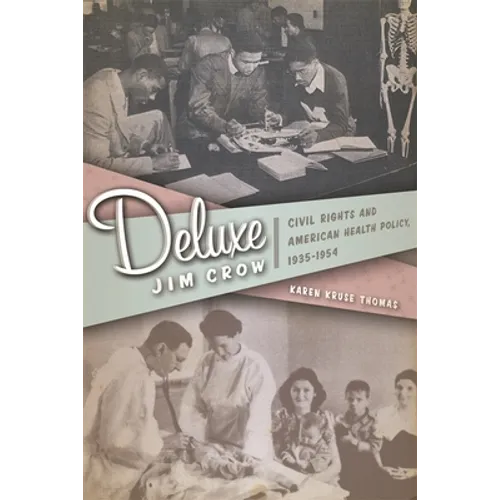
Plagued by geographic isolation, poverty, and acute shortages of health professionals and hospital beds, the South was dubbed by Surgeon General Thomas Parran "the nation's number one health problem." The improvement of southern, rural, and black health would become a top priority of the U.S. Public Health Service during the Roosevelt and Truman administrations.
Karen Kruse Thomas details how NAACP lawsuits pushed southern states to equalize public services and facilities for blacks just as wartime shortages of health personnel and high rates of draft rejections generated broad support for health reform. Southern Democrats leveraged their power in Congress and used the war effort to call for federal aid to uplift the South. The language of regional uplift, Thomas contends, allowed southern liberals to aid blacks while remaining silent on race. Reformers embraced, at least initially, the notion of "deluxe Jim Crow"--support for health care that maintained segregation. Thomas argues that this strategy was, in certain respects, a success, building much-needed hospitals and training more black doctors. By the 1950s, deluxe Jim Crow policy had helped to weaken the legal basis for segregation. Thomas traces this transformation at the national level and in North Carolina, where "deluxe Jim Crow reached its fullest potential." This dual focus allows her to examine the shifting alliances--between blacks and liberal whites, southerners and northerners, activists and doctors--that drove policy. Deluxe Jim Crow provides insight into a variety of historical debates, including the racial dimensions of state building, the nature of white southern liberalism, and the role of black professionals during the long civil rights movement.Author Biography
KAREN KRUSE THOMAS is a postdoctoral fellow at the Institute of the History of Medicine at the Johns Hopkins School of Medicine.