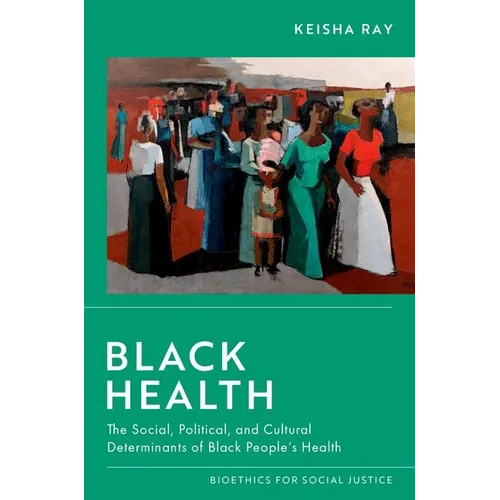
Black Health: The Social, Political, and Cultural Determinants of Black People's Health - Paperback
Available Offers
Fastest Delivery Tomorrow With Vip DealOrder within 1 hr 8 mins.
Instant 10% Discount On HDFC Banks Credit/Debit Cards EMI and CreditCard
Couldn't load pickup availability
Product Details
Flight Range: Up to 1,000 meters (3,280 feet)
Maximum Speed: 45 kilometers per hour (28 miles per hour)
Shipping And Return
For all orders exceeding a value of 100USD shipping is offered for free.
Returns will be accepted for up to 10 days of Customer’s receipt or tracking number on unworn items. You, as a Customer, are obliged to inform us via email before you return the item.
Otherwise, standard shipping charges apply. Check out our delivery Terms & Conditions for more details.
Product Description
by Keisha Ray (Author)
Why do American Black people generally have worse health than American White people? To answer this question, Black Health dispels any notion that Black people have inferior bodies that are inherently susceptible to disease. This is simply false racial science used to justify White supremacy and Black inferiority. A genuine investigation into the status of Black people's health requires us to acknowledge that race has always been a powerful social category that gives access to the resources we need for health and wellbeing to some people, while withholding them from other people.
Systemic racism, oppression, and White supremacy in American institutions have largely been the perpetrators of differing social power and access to resources for Black people. It is these systemic inequities that create the social conditions needed for poor health outcomes for Black people to persist. An examination of social inequities reveals that is no accident that Black people have poorer health than White people. Black Health provides a succinct discussion of Black people's health, including the social, political, and at times cultural determinants of their health. Using real stories from Black people, Ray examines the ways in which Black people's multiple identities--social, cultural, and political--intersect with American institutions--such as housing, education, environmentalism, and health care--to facilitate their poor outcomes in pregnancy and birth, pain management, sleep, and cardiovascular disease.Author Biography
Keisha Ray is an Associate Professor of bioethics and medical humanities at McGovern Medical School in Houston, Texas. Her research focuses on the socio-political determinants of Black people's health and exposing structural racism's effects on Black people's health and wellbeing.